Downey Garage Door Repair
West Covina: When the Garage Door Is the Front Door
Technicians working across West Covina and Los Angeles County — not dispatched from one address. Local routes via I-10 and SR-60.
Open 24/7 for emergencies
Free diagnostic estimate on every call-out
When you ring about a West Covina address, the person who answers is working out which technician is nearest to you at that moment and building a window from that and from whatever I-10 and the 60 are doing while you are on the phone. Nobody is sent from one address to reach yours. Standing behind those vans is a real workshop at 8232 Nance St in Downey — torsion springs racked by wire gauge, drums and bearing plates shelved, reinforcement struts held in stock lengths. That room is the reason the truck reaching your house was filled from our own material, rather than arriving with a shopping list somebody wrote after looking at your door.
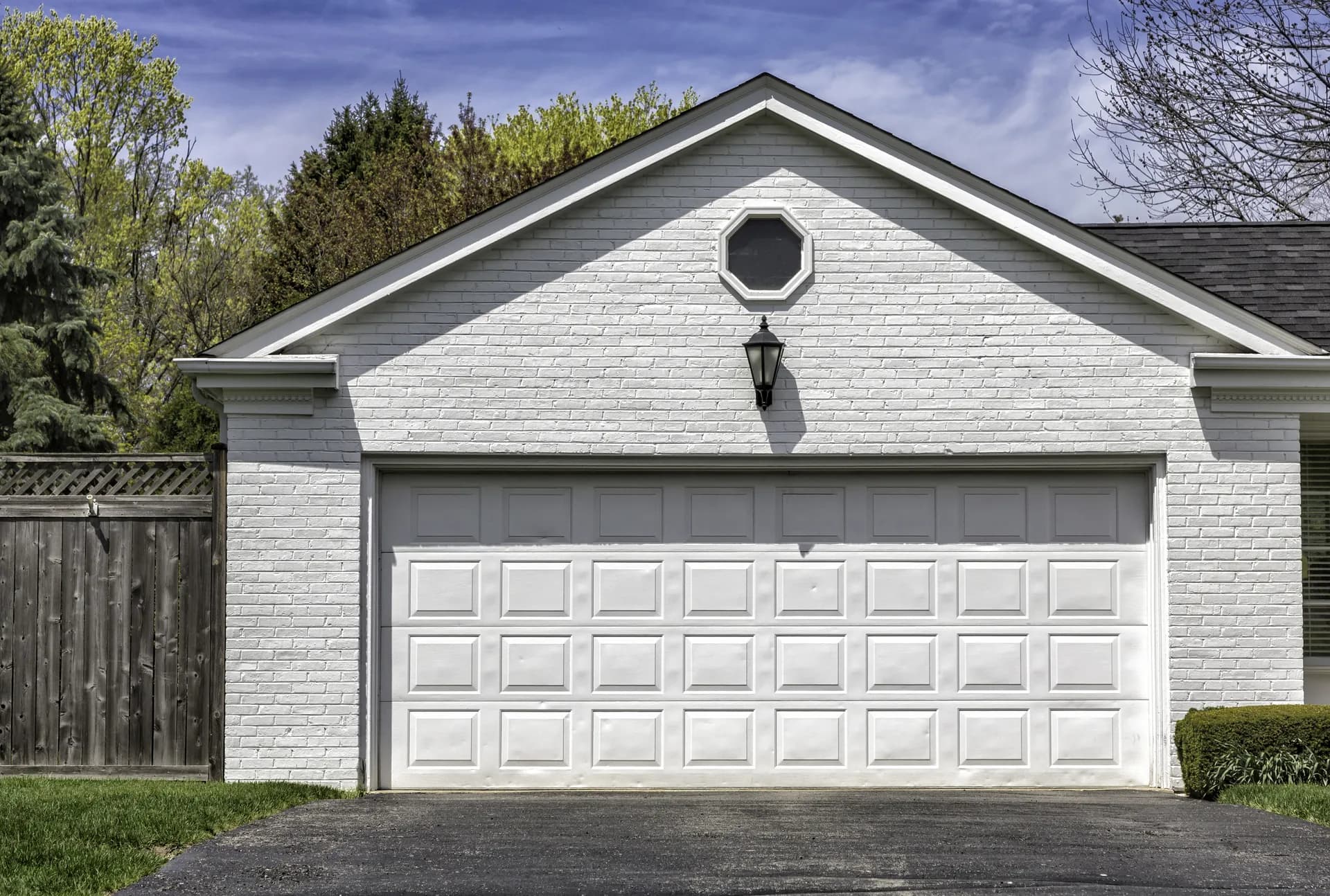
West Covina is the city in this service area where the garage door is doing the most work, and doing a job nobody consciously assigned to it. On a large proportion of these houses it is not a panel at the side of the property that opens twice a day. It is how the household actually comes and goes, used in place of the front door, and it is a wide door — so every one of those trips moves considerably more steel over a considerably longer span than a single-car door ever has to.
A city built at the scale of the car, and a door doing the front door's job
West Covina filled in through the post-war decades as an inland valley city laid out on the assumption that every household would drive. That assumption is legible in the housing stock before you get anywhere near a door. Lots are wider than in the older cities nearer the coast. The garage is attached, framed as part of the house rather than added behind it, and set facing the drive so the car arrives at it directly. Most importantly, the two-car garage here was the standard arrangement rather than the premium one — the single is the exception in this city, which is the reverse of what we find in most of the service area. Two freeway corridors, I-10 and the 60, are the reason the city grew where it did and at the pace it did, and they are still the two roads that decide how long it takes anybody to get anywhere here.
The consequence for us begins with how the door is used rather than how it was built. In a house where the driveway is where the cars live and the garage opens straight into the kitchen or the hallway, nobody walks round to the front door. The garage door is the entrance. That changes what the door has to be good at: it is now a security component and a daily convenience component, not simply a mechanism that raises and lowers. It has to answer a keypad in the rain. It has to answer a remote from the end of the drive, first press, in front of a car that is already rolling. And it has to close completely behind you every single time, including the times you drive off without turning round to watch it — which is nearly all of them.
The second consequence is dimensional, and it is the thing most often underestimated. A 16ft door is not two 8ft doors bolted together. Every load in the system scales with width and most of them scale faster than people expect. The torsion tube spans the whole opening rather than half of it, so it is longer, it twists more under the same torque and it bows more under the pull of the cables hanging off each end. The drums are working against a heavier door, so the cable tension at each bottom fixture is higher and those two brackets become the most heavily stressed non-spring parts on the assembly. The end bearing plates carry more radial load and the centre bearing carries the whole spring reaction. And the top section has to hold its own line across a span with nothing under it — which is where the characteristic failure of this city starts.
Put those two things together — the widest doors we work on, cycling several times a day, every day — and West Covina produces the hardest-worked garage doors in this trade. Not the oldest, not the most neglected, not the most awkwardly built. The hardest worked. That changes what we carry and what we look at first. Wide-door hardware goes on the van deep rather than broad: long shafts and couplers, the drum sizes that suit a two-car opening, end and centre bearing plates, bottom fixtures, cable in the lengths these doors take, and reinforcement struts in stock lengths, because on a door in this city a strut is a repair part far more often than it is an accessory. And it changes the first question a technician asks himself on arrival, which is not what has broken but how many times a day this door moves.
What we fix most often in West Covina
The operator bracket tearing out of the top section
The signature West Covina failure, and the one most reliably paid for twice. On a wide door the opener does not pull the door — it pulls one bracket bolted to the middle of the top section, and the top section is expected to distribute that load out to the ends on its own. Without a reinforcing strut across it, there is nothing spanning that width but the panel itself. The skin dishes around the bracket, the bolt holes go from round to oval, the section bows a little more on every cycle, and eventually the bracket pulls through. What the owner sees is a door that will not move and an opener straining, so the call comes in as an opener fault. It is not. It is a structural failure of the door, and fitting a new opener to a top section in that condition simply destroys the new one on the same schedule.
A door that stops an inch short and looks shut from the street
Far and away the most consequential fault in a house where the garage is the entrance, precisely because it does not announce itself. Something makes the door reverse or stop just before it seats — a photo-eye a fraction out of line, a close-force setting that has drifted, a roller binding in the track, a bottom seal that has hardened enough to read as an obstruction. The door comes to rest an inch or two off the slab. From the drive it looks closed. The seal is not compressed, the bottom of the door is not seated, and the house is standing open behind a door that everybody in it believes is shut. We treat this as a security fault rather than a nuisance, and the diagnosis is worth doing properly rather than by adjusting the force until it stops complaining.
One side of the door lifting a fraction before the other
A wide door's two springs sit on one long tube, and a long steel tube twists under load before it turns as a whole. Add the downward bow the cable tension puts into the middle of that shaft and the two drums do not arrive at the same rotation at the same instant. The door lifts very slightly out of level on every single cycle. Nobody notices it happening; what they notice, thousands of cycles later, is a cable that has gone slack on one drum and started climbing over its own wrap, a groove worn out of shape, or a floor gap that is wider at one end than the other. It is diagnosed by stopping the door mid-travel and looking at it, and it is corrected at the drums with the door level and clamped rather than by taking up the slack side and calling it done.
Entry hardware that has quietly stopped being secure
When a door is the household's way in, its entry hardware ages in the weather and in daily use, and the decline is gradual enough to go unremarked. Exterior keypads sit in full sun and take rain; the membrane hardens and splits, the battery contacts corrode, and after enough years the four keys actually used are visibly more worn than the other eight. Remotes from before rolling-code encryption became standard transmit a fixed code that can be captured and replayed, and plenty of those units are still in service on doors that are otherwise sound. Separately, an emergency release cord left dangling in easy reach of a gap at the head of the door is a known weakness with a straightforward remedy. None of these are expensive to put right, and none of them get looked at unless somebody looks at them.
West Covina garage door FAQs
- Whoever happens to be closest when the phone rings decides it, and nothing else does. Our technicians are spread across the service area rather than beginning each day at one address and fanning out from it, so the person taking your call checks who is currently nearest your street and quotes a window off that position, adjusted for however I-10 and the 60 are running at the time. Where that window is wider than you were hoping for, you will be given the real number rather than an attractive one.
- Sometimes yes, and in this city surprisingly often no. Before agreeing to a new unit, get somebody to look at the top section of the door where the opener arm attaches. On a wide door with no strut across that section, the classic failure is the panel dishing and the bracket tearing out around its bolts, which stops the door dead and makes the motor strain exactly as a failing opener would. If that is what has happened, a new opener fixes nothing and gets ruined in turn. Reinforcing or replacing the top section and fitting a strut is the actual repair, and it is normally the smaller job of the two.
- A strut is a length of steel channel bolted horizontally across the full width of a door section, engaging the end stiles, so the section behaves as a beam instead of as a sheet. Its job on the top section is to spread the opener's pull out from the single bracket to the whole width of the door. Most builder-specification wide doors leave the factory without one, or with one on the bottom section only, because it is a cost item and the door works perfectly well without it for the first few thousand cycles. On a door this wide that gets used several times a day, it is not an upgrade. It is the part that should have been there.
- In a house where the garage door is the entrance, yes, and for one specific reason rather than for the app. The dangerous failure is not a door that will not close, which you find out about immediately. It is a door that stops just short and looks shut, which you may not find out about at all. A position sensor that tells you the door is not closed removes that blind spot, and an unattended-close function will shut a door you left open by mistake. Two honest caveats: a compliant unattended close warns before it moves the door, and a tilt sensor on the top section reads position rather than seating, so it can report a nearly-closed door as closed. The mechanical fault still needs fixing; the monitoring tells you it is there.
- Licensed, insured and bonded, and the documentation is yours to see on request before a technician picks up a tool. No fee attaches to the diagnosis itself. Somebody attends, isolates what has actually failed, puts the component in front of you, and leaves you holding a written estimate that itemises parts apart from labour. Decline it and you owe nothing.
Request service
Fast callback during business hours. For urgent safety issues, call now.