Downey Garage Door Repair
Cypress: A Cared-For Door Can Still Be Worn
Technicians working across Cypress and Orange County — not dispatched from one address. Local routes via SR-91 and I-605.
Open 24/7 for emergencies
Free diagnostic estimate on every call-out
Ring us about a Cypress address and the first thing the person on the phone does is work out which of our technicians is closest to you at that moment, then build a time window from that and from whatever the 91 and the 605 are doing while you talk. Our people work across the county through the day rather than setting out from and returning to one building, so the window you are given comes from where somebody actually is and not from a depot on a map. Behind those vans sits our own shop at 8232 Nance St in Downey, and inside it is a real parts room — torsion springs racked by wire size, drums, bearings, cable on the reel, rollers and hinges on the shelf — which is the reason a van reaches you already carrying what the job is likely to need rather than turning up to look and order later.
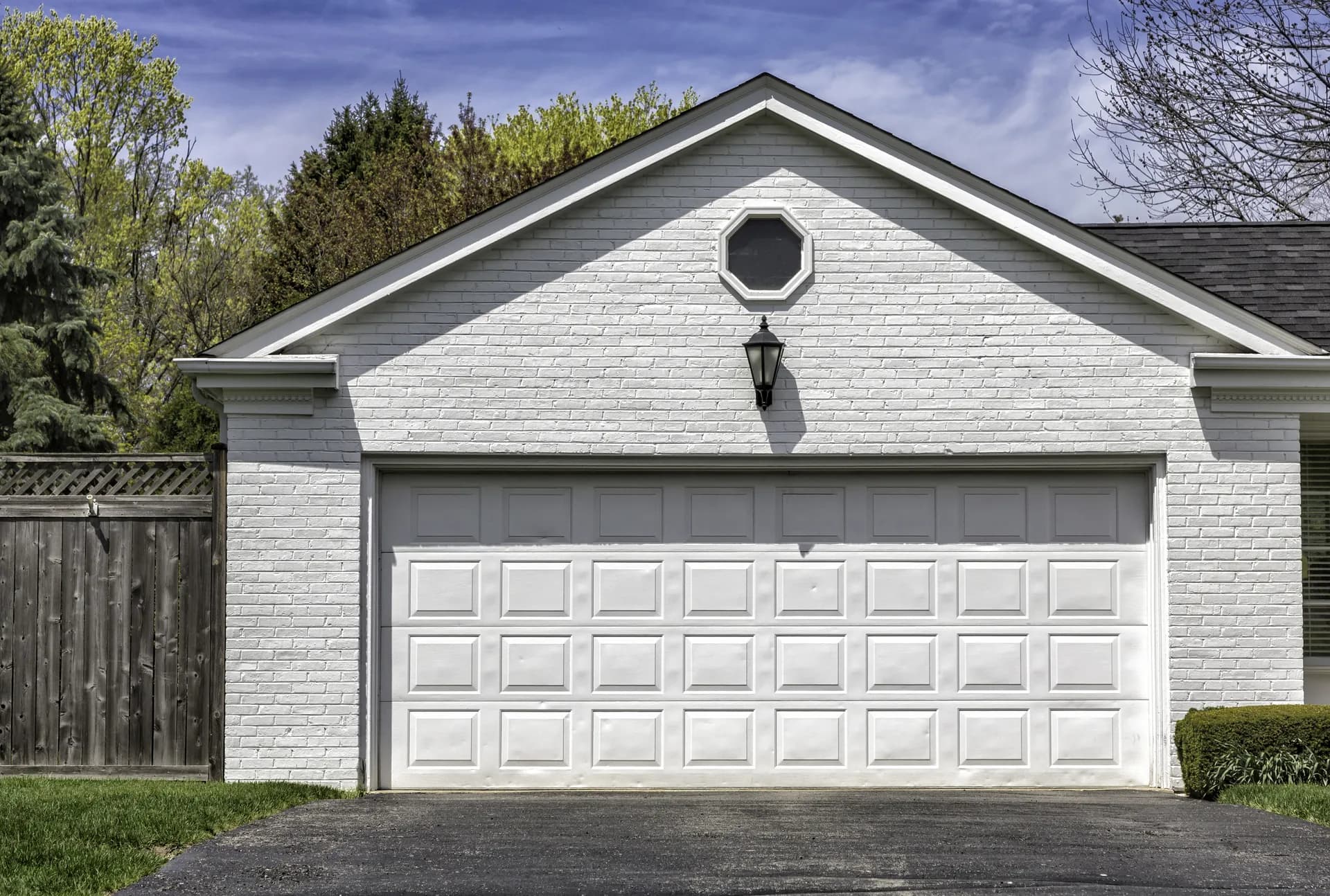
Cypress is a settled part of Orange County, and a great many of the garage doors here are visibly looked after. The panels are painted, the track is wiped clean, the door runs without complaint and nothing about it looks like it needs a tradesman. That is exactly the situation this page is about, because a door that looks cared for is not the same thing as a door that has been serviced, and the two come apart in ways you cannot see from the driveway. Cosmetic upkeep keeps the outside of a door in good order. It does nothing at all for the counterbalance, the bearings, the inside of the cables or the calibration of the opener, and those are the parts that decide whether the door is actually sound.
Why a door that looks after itself still needs looking at
Start with what is genuinely true about the doors in this city: a lot of them are in good order to look at. Somebody has kept the finish up, cleared the track of grit, swept the garage, and the door goes up and down on demand without a fuss. None of that is wasted effort — a painted door lasts longer against the weather and a clean track does run better than a dirty one. The trap is in what that visible care quietly gets taken to mean. An owner who has looked after everything they can see reasonably assumes the door is in the same condition as the rest of the house, and on a garage door that assumption does not hold, because almost everything that wears on a door wears where nobody looks.
Draw the line between the two kinds of care and it becomes obvious. Repainting the panels, wiping the sections, brushing out the track, even oiling a hinge — that is surface work, and it is all most doors ever get. A mechanical service is a different thing entirely: checking that the door is still balanced on its springs, that the bearings the shaft turns in are not worn, that the cables are sound inside the wrap where they take their load, that the opener is not quietly working harder than it should to move the door. A door in this city can have been repainted three times over the years and never once, in all that time, have had its balance tested or its counterbalance looked at. The paint is current. The mechanism underneath it is running on whatever it was set to when it went in.
That changes how a technician has to look at a well-kept door, and it is worth being plain that it makes the job harder rather than easier. On a neglected door the trouble announces itself — the rust, the frayed cable, the roller hanging out of the track, the panel somebody reversed into. On a tidy door those obvious signals have been kept at bay, so the real condition has to be read from the small indicators that upkeep does not reach: a coil gap that has opened a fraction at the spring, a single cable strand lifted where the cable wraps the drum, a roller with a flat starting to develop on one side, a trace of play in a hinge that should be tight. The tidy door does not need less inspection because it looks well. It needs more, because the easy tells have been painted over and the honest answer is further in.
The case for having a door like this properly looked at is strongest, oddly, for the owner who keeps everything else in order — because a genuine mechanical service is very likely the one job on the whole house that has never been done to it. This is not an argument about money and it is not a service being sold; it is about consequence. A spring reaches the end of its life whether or not the door is clean, and it tends to do it on a door nobody thought needed attention, which is how a working household finds itself with the car shut in on a weekday morning. The honest other half of that, which we will always tell you, is that a well-kept door quite often checks out and needs nothing done at all — and when that is the truth, you will be told it plainly and the van will leave. A closing point of housekeeping: this city falls under Orange County, which matters only if a job turns structural — reframing an opening, carrying a fresh header — because that sort of work answers to a different permitting body than the bulk of what we do, on its own schedule. A straight repair never touches any of it. As for the 91 and the 605, they are nothing more than the roads our people travel to reach you, and how busy they happen to be at the time is no substitute for a clock.
What we fix most often in Cypress
A spring that looks the same the day before it lets go
The torsion spring is the clearest example of the whole problem, because it is the one part on the door whose condition cannot be read from how it looks. It does not sag, it does not weep, it does not change colour or bulge or give any real outward sign as it approaches the end of its life — it looks very much on its last day as it did on its first. Fatigue in a wound spring builds inside the wire under every cycle and stays there, invisible, until a crack runs and the spring drops open with a bang. On a neglected door you might at least catch surface corrosion eating into it. On a clean, dry, well-kept door there is nothing on the outside to find, which is exactly why the failure comes as a surprise to the people most likely to have looked after everything else. What can be read is narrow and worth knowing: the gap between the coils at rest, a proper balance test, and an honest estimate of how many cycles the household has actually put through the door. What the paintwork says about it is nothing.
Bearings that run quietly right up until they don't
A garage door turns on bearings — one at each end of the torsion shaft and, on a wide door, one carrying the centre — and a bearing is designed to run silently, which is precisely what makes its wear so easy to miss on a door that is otherwise cared for. It gives no trouble for years. Then the race wears, the shaft starts to move where it should be held true, the door begins to lift a touch crooked and the cables to wind unevenly on the drums, and only fairly late in that process does it finally start to make the noise that gets somebody to ring. By then the wear has usually spread from the small part that failed quietly into the cables and drums that were never the problem. Cleaning and painting never touch a bearing. Checking shaft runout and bearing play is a two-minute job on an inspection and one of the more useful things that gets done, because catching a dry bearing early is small and catching it late is not.
Cable wear that happens down inside the strand
A lift cable is not a solid wire but a rope laid up from many fine strands, and it carries half the weight of the door every time it moves. The wear that finishes it off begins on the inside of that lay, where the strands rub against one another under load, well before anything shows on the outside surface a person would see. A cable can look clean and intact along its visible length and already be failing within, particularly at the two points where it works hardest: where it wraps onto the drum and where it lands at the bottom fixture. The first outward sign is often a single broken strand lifting proud of the wrap, which is easy to walk past on a tidy door and is a genuine warning that the cable is going. This is the sort of thing an inspection is for, because a cable that parts while the door is up is a sudden and heavy failure, and it gives far more notice down inside the strand than it does on the surface.
An opener quietly turning up its own effort
Modern openers hold a force setting — how hard the motor is allowed to push and pull before it decides something is wrong and stops. When a door gradually gets stiffer to move, because a spring is tiring or a bearing is dragging or the rollers are no longer running freely, the door still opens, so nobody thinks anything of it; but the opener has quietly had to use more of its allowance to keep doing the job. On many doors that force has been wound up over the years, sometimes by an owner chasing a door that had started to baulk, sometimes by the unit's own automatic learning, and each turn of it hides a little more of the mechanical problem underneath. A door that needs a firm shove from a strong opener to close is not a healthy door with a good motor; it is usually a door out of balance with a motor covering for it. The force setting is invisible from the outside, and it is one of the first things worth reading on a door that looks like it works perfectly well.
Cypress garage door FAQs
- It depends on which technician is nearest you when you ring, and there is no more truthful basis for an answer than that. Our people are spread across the service area rather than heading out from one address, so whoever takes your call looks at where the closest van actually is and builds a window from that and from how the 91 and the 605 are moving at the time. If the honest answer is longer than you would like, it is still the one you will be given. A window you can build your day around beats a flattering one that then slips.
- Possibly not — and if that is what we find, we will say so and leave. But the fact that a door looks well and runs today tells you about its appearance and very little about its condition, because the parts that wear out do so where you cannot see them. The spring gives almost no outward warning, the bearings run silent until late, the cables wear from the inside, and the opener can be quietly straining. A proper look at the balance, the counterbalance, the cables and the running gear is very often the one bit of maintenance a well-kept door has never had. If it checks out, that is genuinely good news you can rely on rather than assume.
- Because looking after a door and servicing a door are two different things, and only one of them reaches the parts that fail. Painting, cleaning and the odd drop of oil keep the visible door in good order, which is worthwhile, but none of it touches the spring's fatigue life, the bearings, the inside of the cables or the opener's calibration. Those wear on their own schedule regardless of how tidy the door is kept. That is why the failure so often surprises exactly the households that maintain everything else — the door looked like part of the well-run house, and mechanically it had simply never been serviced.
- The things upkeep does not reach. We uncouple the opener and move the door by hand to see whether it is still balanced on its springs, which is the single most telling check and one almost no owner has done. We read the coil gap on the spring, check the shaft for runout and the bearings for play, run the cables through our hands end to end looking for a strand lifting at the drum or corrosion at the bottom fixture, feel each roller for a developing flat, and check the hinges for elongation. Then we read where the opener's force has been set. None of that shows from the driveway, and all of it is what actually decides whether the door is sound.
- We are licensed, insured and bonded, and any of that can be put in front of you in writing before a tool comes out. There is no charge for the diagnosis: a technician attends, establishes the condition of the door, shows you what he found rather than describing it from the top of a ladder, and leaves a written estimate with the parts set out separately from the labour. Decide against the work and you owe nothing. Should the job turn out to be structural rather than a straightforward repair, we will also flag at that point that the permitting for it goes through Orange County rather than Los Angeles County, and what that does to the timeline.
Request service
Fast callback during business hours. For urgent safety issues, call now.