Downey Garage Door Repair
Short Driveways and Doors With No Room to Err
Technicians working across Hawaiian Gardens and Los Angeles County — not dispatched from one address. Local routes via SR-91 and I-605.
Open 24/7 for emergencies
Free diagnostic estimate on every call-out
Call us and the first thing the person answering does is find out which of our technicians is closest to you right now. They work spread across the whole service area rather than sitting at one address waiting to be sent out, so the arrival window you are quoted is built from the real position of the nearest van and the traffic between it and you — not from a fixed promise and not from how far any shop happens to be. Behind that van is a working building at 8232 Nance St in Downey, with a parts room and a spring rack the vans are loaded from, so a Hawaiian Gardens job goes out stocked from our own shelves rather than on a promise to fetch the part tomorrow.
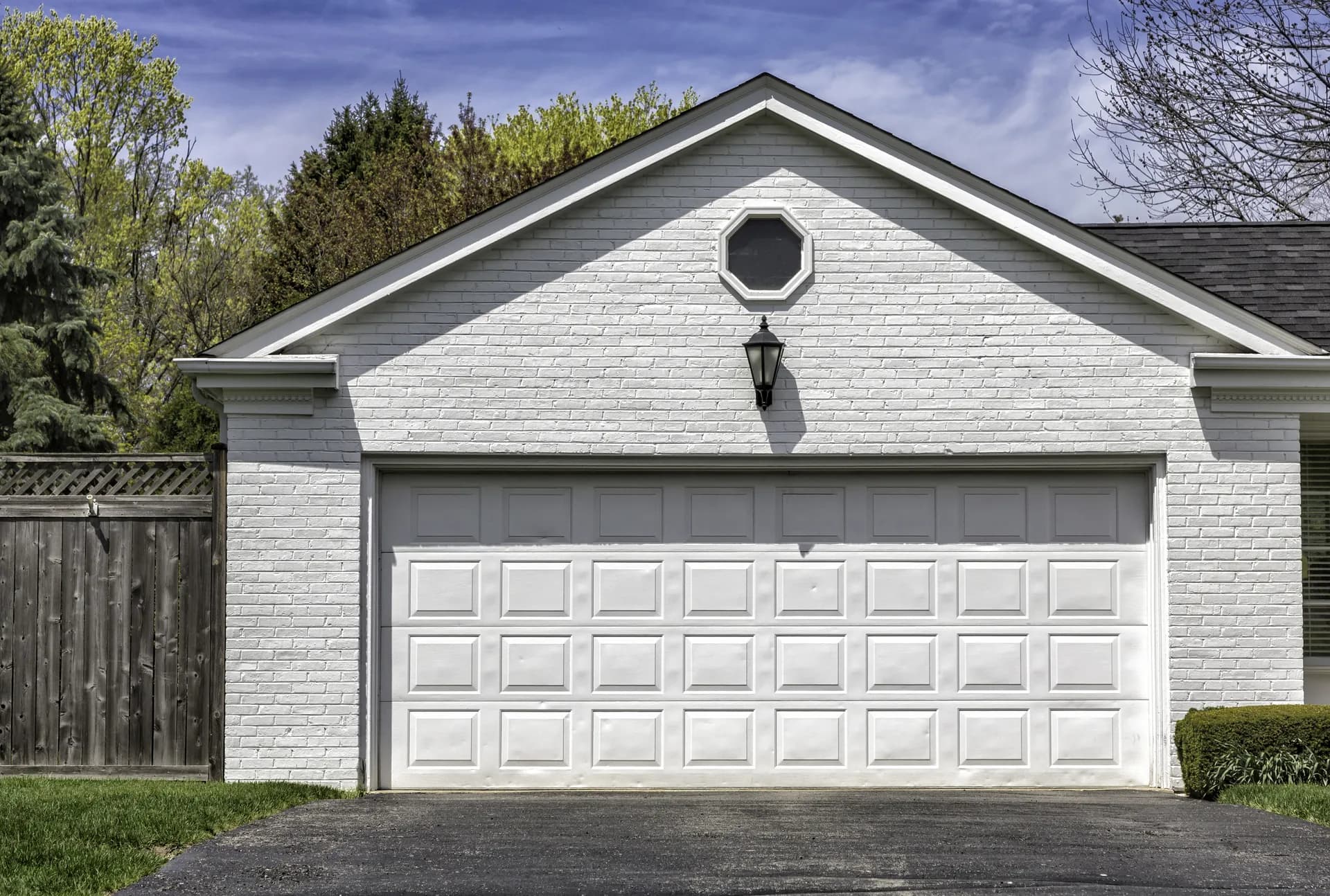
Hawaiian Gardens is the smallest city by land area in Los Angeles County, and it is built on genuinely small parcels. For this trade the detail that matters is the driveway. Many drives here are short — too short to hold a car and still leave clear space in front of the closed door — so the parked vehicle sits close to the door, inches rather than feet away. That single fact changes what a garage door fault costs. A door that drifts down, closes a little early, or reverses onto something in its path has almost no room to be wrong before it meets a bumper, and on these lots contact between a moving door and a parked car is a routine failure we are called to rather than a freak event.
Why a short driveway changes the garage door job
Stand at the kerb in front of a typical Hawaiian Gardens garage and there is not much distance between you and the door. The city occupies less ground than any other in the county, the parcels were built out tight, and the driveway is frequently just long enough to get a car off the street and no further. The practical result is that the car, when it is parked, sits within inches of the closed door rather than the several feet a longer drive would leave. Almost everything on this page follows from that gap being small, because a garage door is a large moving object and the margin it has to work within here is measured in inches, not feet.
On a longer drive a door that closes a fraction too far, or hesitates and drops the last stretch, has room to be slightly wrong without touching anything. Here it does not. The down travel limit — the point the opener drives the door to before it decides the door is shut — and the down-force setting that tells the opener the difference between the floor and an obstruction both have to be right, because a few inches of error is the whole distance between the closed door and the front of the car. On a short drive those settings are a safety matter rather than a question of comfort, and we treat them that way. A door set to close half an inch beyond the floor on a long drive is a minor fault; the same setting here puts the bottom of the door onto a bumper.
A short drive also puts the door close to the public footway and the road. When a door on a long private drive is left standing open, there is distance and often a gate between the opening and anybody passing. A Hawaiian Gardens garage frequently opens almost directly onto the pavement, so a door stuck open by a fault exposes the whole garage to the street the moment it fails — there is no depth of driveway to keep the contents back from the footway. That makes the security consequence of a fault immediate here in a way it is not on a deeper lot, and it is part of why we treat a door that will not close as something to deal with now rather than tomorrow.
Because the drive is short, the activity a longer driveway would absorb spills onto the street. Loading and unloading happens partly at the kerb, so the door is cycled with people, bags and objects moving through the opening far more than a quieter drive would see. Deliveries pull up at the kerb a car-length from the door, waste collection passes within the same distance, and other vehicles park close to the opening. The upshot is a door whose photo-eyes genuinely earn their keep — there is constantly something crossing the beam — and a bottom track that collects road grit and takes the occasional low-speed knock from the traffic passing so close to it. Neither is dramatic on any given day; both shape what wears out and when.
What we fix most often in Hawaiian Gardens
A door that meets the car it is parked in front of
The defining Hawaiian Gardens fault. With the car parked inches from the closed door there is almost no margin, so anything that lets the door travel a little too far, or come down when something is in the way, ends in contact. A down-limit that has drifted, a down-force wound up until the opener pushes through resistance, a bottom seal or roller that lets the door settle lower than it should, or a reversing system that reacts a fraction too slowly — each is harmless on a long drive, and each, here, can put the bottom section against a bumper or a tailgate. We check the travel limit, the down-force and the contact reversal as a set on any door where the car parks close, because on these lots those three settings are the difference between a door that shuts and a door that dents.
Photo-eyes on a door cycled through constant traffic
A garage whose opening is busy with people and objects moving through it — because the short drive pushes loading and unloading up to the kerb — puts real demand on the safety sensors. The two photo-eyes mounted low on each jamb stop and reverse the door if anything breaks the beam while it is closing, and on a door cycled this often, with bags, feet and stored items passing through the opening all day, they are triggered, nudged and filmed over far more than on a quiet drive. A sensor knocked a few degrees out of line by something set down beside it, or a lens dulled by road dust, shows up as a door that refuses to close and gives no reason. It is usually a realignment and a clean rather than a new part, and it is worth getting right rather than defeating, because the reason the sensors exist is standing in the opening here more often than most.
Grit and low-speed knocks in the bottom track
The bottom of the door and the lowest run of vertical track sit close to a busy kerb, and it tells. Road grit blown or carried in settles in the bottom track where the rollers run, so the door grinds and the rollers wear before their time. Deliveries, waste collection and parking manoeuvres pass within a car-length of the opening, and the occasional low-speed contact — a wheel, a bin, a bumper against the bottom section or the track flange — leaves a door that still runs but no longer runs true. A track pushed a few millimetres out of plumb at the bottom binds the door on that side every cycle; a dented bottom section drags. We replace a knocked track section rather than beat it straight, because a track hammered back into shape keeps the kink the roller then finds on every pass.
A fault that leaves the garage open to the pavement
On a short drive the difference between a door that will not close and an exposed garage is nothing — there is no length of driveway to hold the contents back from the footway. A snapped cable, a failed spring, a photo-eye fault that parks the door open, or an opener that has lost its down travel all leave the garage standing open almost on the pavement, in full view of and reach from the street. That is why a door that will not close is not a wait-till-morning problem here, and why we would rather come out and secure the opening than leave a garage exposed to the road overnight. Where we cannot complete a repair on the spot, we secure the door and the opening before we leave.
Hawaiian Gardens garage door FAQs
- It depends on who is nearest to you when you ring, and we will tell you honestly. Our technicians are spread across the service area rather than setting out from one address, so the person answering checks where the closest van actually is, weighs the traffic between it and you, and gives you a real window instead of a standard promise. You will hear from us when the technician sets off. If every nearby van is committed and the honest answer is longer, we will say so rather than book you and hope.
- It affects the staging rather than the work, and it helps to mention it when you book. On a short drive there may be no room to keep the car in front of the door while a technician works, so the car usually needs to come off the drive and onto the street for the visit, and there is little space at the door itself to lay tools out. None of that changes what you pay or what can be fixed — springs, cables, rollers, tracks and openers are all serviceable in that space — but it decides how the technician plans the visit, so tell us how the drive runs and whether the car can be moved.
- Stop using the door until it is looked at, and do not wind anything up to force it. A door coming down onto the car is almost always a travel or force problem rather than a broken part: the down-limit has drifted so the opener drives the door too far, or the down-force has been set high enough that the opener pushes through the contact instead of reversing off it. On a short drive there is no margin to absorb that, which is exactly why it ends in contact here. It is an adjustment in most cases, but it has to be set and then tested against the actual close, not guessed at.
- We treat it as urgent. With a short drive there is no distance between the open door and the pavement, so a garage stuck open is exposed to the street straight away, along with everything in it. That is a different situation from a door left open at the end of a long private drive, and it is not one to leave overnight. Tell us on the call that the door will not close, and if the correct part is on the nearest van we aim to finish it there and then; if not, we secure the opening before we leave and book the completion.
- The written estimate is free and there is no call-out charge on it. A technician diagnoses the fault, puts the failed part in your hand rather than describing it, and writes the work down as separate parts and labour lines before anything is taken apart — and if you decide not to go ahead, you owe nothing. We are licensed, insured and bonded, and the paperwork is available in writing whenever you would rather see it than take our word for it.
Request service
Fast callback during business hours. For urgent safety issues, call now.