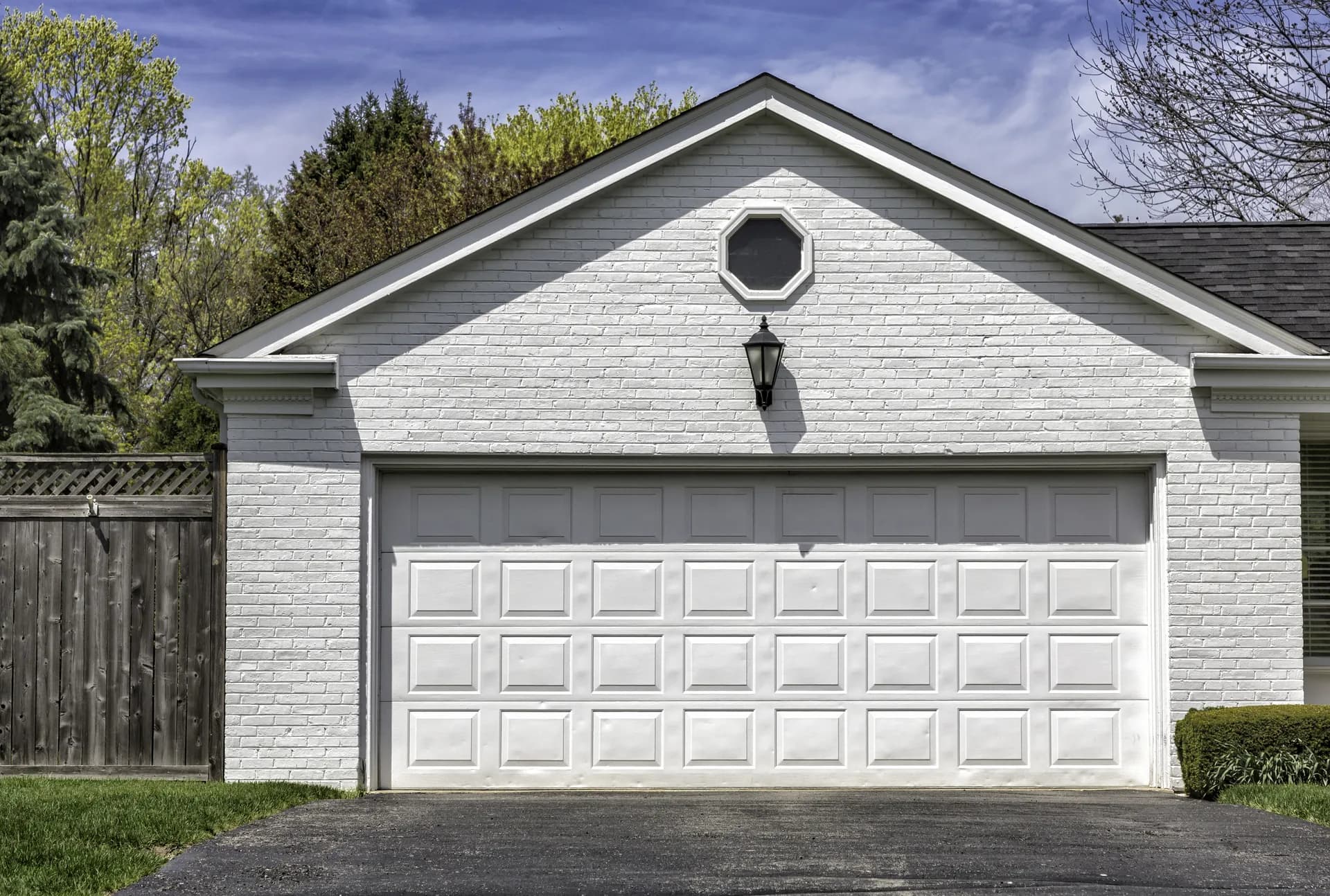
Downey Garage Door Repair
A City of Same-Spec Springs Aging on One Clock
Technicians working across La Palma and Orange County — not dispatched from one address. Local routes via I-5 and SR-91.
Open 24/7 for emergencies
Free diagnostic estimate on every call-out
When you call about a La Palma address, the person answering is looking at which of our technicians is nearest to you at that moment, because that is the only thing that honestly decides your arrival window. Our people work spread across the service area rather than waiting at a yard to be sent out. Behind them there is a real workshop at 8232 Nance St in Downey with a parts room in it — torsion springs sorted by wire size and drum, cables, drums, bearings, rollers, seals and opener boards on shelves — and the van that reaches you was loaded from those shelves before anyone had seen your driveway. Whoever picks up can tell you where the nearest technician is and which way he is coming, whether that is down off the 5 or across on the 91.
Most of this page, though, is about a fact of construction rather than a fault. La Palma is a small, almost entirely residential city, and it was built out over a very short window by a small number of developers working from a handful of plans. The practical result is that the garage doors here are unusually uniform — the same door types, the same widths, hung the same way, and above all the same counterbalance springs, street after street. Because those springs went in to the same specification within a few years of one another, they behave as a fleet, and a fleet reaches the end of its life together. The plain version of that is this: the spring failure one house had last month is the failure the next house has next month, and the value of a company that already knows this city's stock is that it knows what is coming before it arrives.
What a city built to a handful of plans means for your door
Start with the buildings, because everything on this page comes back to them. La Palma went up over a short building period, laid out by a small number of developers who worked from a limited set of plans, and that is unusual enough to matter. In most cities the housing stock is a mixture of ages and types accumulated over decades, and the garage door on any given driveway could be almost anything. Here it is not. The doors are the same handful of sizes, they were built to the same builder specifications, they were hung with the same track, hardware and counterbalance arrangement, and — the point that governs the rest of this page — they were installed within a few years of each other. This is a statement about the hardware, not about the people who own it. The doors are uniform because the buildings were poured that way.
The consequence that reaches us most often is at the spring. On a torsion door the spring is a consumable rated in cycles, one cycle being a full open and a full close, and a builder-grade spring is typically wound for something in the region of ten thousand of them. Fit the same spring, to the same specification, above the same door, in the same year, on street after street, and you have installed a fleet of parts with a common rating and a common start date. Add roughly similar everyday domestic use and the failures do not scatter at random the way they would in a mixed city — they arrive on a schedule, house by house, along a street. When a door near you lets go, yours is very often not a hypothetical risk sitting somewhere in the future; it is on the same countdown, a little ahead of or behind its neighbour.
The uniformity does not stop at the spring, and that changes the honest conversation about any single repair. The cables that share the load with the spring, the rollers the door runs on, the end bearings the shaft turns in and the opener that drives it were all fitted in the same window and have carried the same cycle count. So when the spring goes on one of these doors, it is rarely a lone event with a lone cause. The same-age cables are near the point where strands begin to lift at the drum, the same-age rollers are near the point where they go rough and drag, and the same-age opener has usually been quietly working harder for a while to compensate. We would rather tell you plainly what else on the door is close to its own end than replace one part in isolation and let the next call arrive on its own timetable.
The last consequence is a practical convenience, and it works in your favour twice over. Because the stock is so consistent, a technician who has worked several La Palma doors of this type recently already knows the drum number, the wire size and the track radius yours is likely to use, which means the van can be loaded correctly from your description on the phone alone, before anyone has stood on your driveway. Whoever is nearest to you is who comes, and every one of them is working the same known stock. The lots are consistent as well: small, uniform footprints with short driveways close to the neighbour's, so the space a technician has to stage a door, park a van and work the tracks is much the same from one call to the next. There are fewer surprises on the day because there are fewer surprises in the city.
What we fix most often in La Palma
Springs reaching the end of a shared cycle life in step along a street
This is the failure the whole city is built around. A torsion spring is a cycle-rated consumable, and when the same spec goes in above the same door in the same year, the springs on your door and on the doors near you started their working lives together with the same rating. Once a neighbour's has let go with the characteristic single loud report, yours is not a distant maybe — it is on the same schedule, near the same point. There is no defect in any of it; the springs are simply consumables reaching the end of what they were wound for, all at roughly once. The useful thing is that it is predictable, which means it is worth having yours read rather than waiting for the bang that strands a car in a closed garage.
The same-age cables and rollers that follow the spring down
Because the running gear was installed alongside the spring and has turned through the same number of cycles, the parts that fail after a spring rarely wait long. Lift cables begin lifting strands where they wrap onto the drum, on the face turned away from anyone standing in the garage; steel rollers that have run dry go noisy, then rough, then start dragging the door out of square. On a mixed-age door these might be years apart. On one of this city's doors they tend to cluster, because they are all the same age. We inspect them as part of a spring visit rather than as an afterthought, since the door is already open and the shaft already accessible, and that is the one moment they can be reached without dismantling anything twice.
End bearings and shafts wearing to the same pattern across the stock
The torsion shaft turns in end bearings at each side, and on the wider doors here in a centre bearing as well. They are greased on the day they are fitted and, on the great majority of these doors, that is the last attention they get. Once the lubricant has dried the shaft runs metal on metal and the resistance climbs quietly, and because the bearings are the same part fitted in the same window, they dry out and wear on much the same timetable from door to door. The tell is a low grinding or rumble that owners describe as the door sounding heavier than it used to — which is accurate, because from the spring's point of view it is heavier. A bearing is one of the smallest parts in the system and one of the most consequential, and we know to check it because we have seen its twin on the same streets.
Openers of one generation reaching obsolescence together
The openers went in during the same window as the doors, which means the ones on these driveways tend to belong to one or two generations rather than a spread of them. That has a predictable edge to it: when the logic boards for that generation go out of production, they do so for the whole cohort at once, so a fault that is a simple board swap today can become a forced replacement a few years from now. The same generation also shares a safety-code era and a set of drive components at the same point of wear. We will keep and repair a sound opener wherever the parts remain available, and we will tell you plainly when a unit's generation has reached the point where a repair is buying very little time.
La Palma garage door FAQs
- It is worth having yours looked at rather than dismissed, and the reason is specific to how this city was built. The doors near you were fitted to the same specification within the same few years, so their springs share a rating and a start date. Once one on a nearby door has reached the end of its cycles, the others are usually not far behind — not because anything is defective, but because they are consumables that all began work together. An inspection tells you where yours sits on that curve, and it lets you deal with it at a moment of your choosing rather than the morning it strands a car behind a door that will not open.
- Because the stock here is so uniform. When the doors on a street were built to a handful of plans in the same window, the drum size, the wire size and the track radius repeat from one to the next, so a technician who has worked several of them recently can tell from your description on the phone what your door is likely to use. That means the van is loaded correctly before anyone has stood on your driveway. Whoever is nearest to you is who comes, and every one of our people is working the same known stock — so we still measure and confirm on site, but we very rarely arrive without the right part aboard.
- Because on a door of this city's vintage those parts are the same age as the spring and have done the same work. The cables, the rollers, the bearings and the opener all went in within the same window and have carried the same cycle count, so when the spring reaches its end the others are usually close to theirs. That does not mean we replace everything — plenty of it has life left. It means we look, and we tell you honestly what is close to following the spring down, so the next failure is something you chose to deal with rather than something that happened to you. There is no obligation attached to that list.
- Our technicians are spread across the service area rather than starting the day from one address, so when you call, the person answering looks at which of them is nearest to you right then and builds a window from that and from what the roads are doing — the 5 and the 91 both feed this area and both can back up. You get a figure made from those two things rather than a stock promise, and we would rather tell you ninety minutes and mean it than say thirty and miss it. Because the vans already carry the parts these doors use, the visit is usually a single one.
- We are licensed, insured and bonded, and we will put those details in writing before any work starts if you would like them for your own records. The diagnostic visit carries no call-out charge. A technician comes out, establishes what is wrong, puts the failed component in your hand rather than describing it, and leaves you with a written estimate that sets out parts and labour separately. If you would rather not proceed, that is the end of it and there is nothing owing.
Request service
Fast callback during business hours. For urgent safety issues, call now.