Downey Garage Door Repair
Garage Door Repair in Cypress, CA
Garage Door Repair in Cypress, Orange County. Technicians work across the area, so when you call we send whoever is nearest to you.
Open 24/7 for emergencies
Free diagnostic estimate on every call-out
Hardly anyone who calls can name the part that has actually failed, and nobody should be expected to. What you are working from is a symptom — the door climbs partway and halts, comes down out of true, has picked up a sound it was not making last year, or simply sits there when you press the button. Each of those has several candidates behind it, and more than one of those candidates is a part that has been quietly wrecked by another part giving way upstream of it.
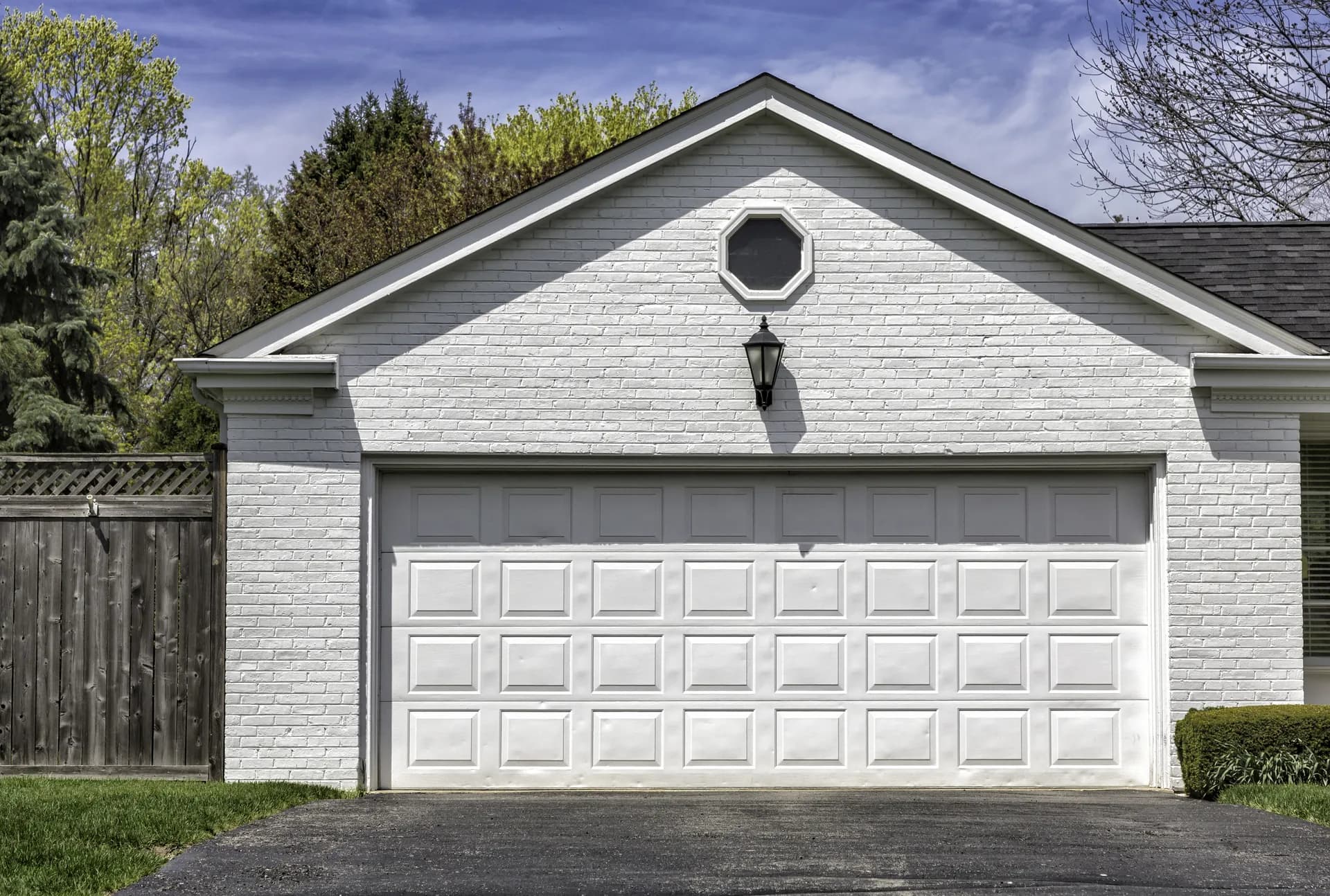
What is a little different about a repair in Cypress is that a good share of the doors are well kept, and a well-kept door is a harder thing to diagnose honestly than a neglected one, not an easier one. The rust and the obvious damage that would tell the story on a run-down door have been kept away, so the actual condition has to be read from the quiet indicators that cleaning and painting never touch. The visit is largely about looking past how well the door presents to what the wearing parts are actually doing underneath.
Why a tidy door is the more careful inspection
The instinct with a door that looks after itself is to assume the job is small, and now and then it is. But appearance and condition are only loosely connected on a garage door, because the finish and the track — the parts an owner can see and reach — are exactly the parts that upkeep keeps in good order, while the counterbalance, the bearings, the cable interiors and the opener's calibration sit out of sight and get none of it. A door can look immaculate and be running on a spring near the end of its fatigue life, a dry bearing, and a cable quietly failing inside the lay. The tidy finish is genuine; it just is not evidence about the mechanism.
So the inspection on a well-kept door deliberately goes past the obvious. Instead of the rust and the frayed cable that a neglected door hands you, we are looking for the small things upkeep does not disturb: a coil gap that has opened slightly at rest on the spring, a single strand lifted where a cable wraps the drum, a flat starting on one roller, a hinge with a trace of play in it, and a shaft that moves a fraction in a worn bearing when it should run true. Each of those is a real indicator of wear, and each is easy to miss precisely because everything around it looks so well.
This is also why 'it looks fine' is worth so little as a guide on a door of this kind, and why a proper look is worth so much. The owner is not wrong that the door looks fine — it does. They are only wrong to read that as meaning it is sound, and the gap between the two is where the surprise failure lives. Reading the door properly means treating the good appearance as a reason to look harder rather than a licence to look less, because on a door this well presented the honest signals are the quiet ones and they will not come to you on their own.
Working the door in order, with the motor taken out of it
So the first thing done on the door is to pull the release, disconnect the motor and run the door up and down on nothing but a hand — while the opener is still coupled, a fault in the door and a fault in the motor mask one another completely, and there is no telling them apart. A door in good balance takes only a gentle push and, left at any point in its travel, more or less stays put. Let it go and watch it settle toward the floor and the door is outrunning its springs; watch it creep upward instead and there is too much wind in them. On a door that has been kept up, that hand test is frequently the very first solid proof that anything is amiss at all, because the loss of balance came on slowly and the opener has been quietly absorbing it.
From there the load path gets followed in order. The spring first — its coil gap at rest, whether the door balances, and an honest read of how many cycles the household has put through it. Then the centre bearing and the plate it sits in, the shaft for runout, the drums for wear and for the cable seating cleanly in them, and the cables themselves along their whole length, with particular attention where they wrap the drum and where they land at the bottom fixture. These are the components whose wear a tidy door hides best, and they are checked by hand and by eye rather than taken on trust because the door looks well.
The running gear and the electrics are deliberately kept for last. Each roller is turned by hand and felt for a flat spot, the hinges are checked for slop at their fixing holes, the vertical track for plumb and the door for square across the opening. The opener is examined only once the door itself is known to be balanced and true — reading where its force has been set, testing that it reverses on the safety systems, confirming its travel limits. Reach for a meter and begin condemning the control board before the mechanical side has been cleared, and you will hang a motor for work the door had been forcing it to do. That trap is especially easy to fall into on a tidy door, since the motor is nearly always the first thing the owner blames.
What gets finished on the visit, and the honest ‘it is fine’ result
The bulk of what a door turns out to need is handled on that first visit — a spring, cables, a drum or a bearing, rollers, a hinge, a fixture, an alignment of the track, a perimeter seal, a sensor put right, or the travel and force reset on the opener. Each van is stocked before the shift from our own parts store at the Downey premises, the springs sorted on their rack by wire size and the rest waiting on the shelves, which is what lets most of these calls close out the same day instead of becoming a second appointment. All of that describes the load on the vehicle, though, and nothing at all about the route it took — whoever turns up is just the technician who happened to be standing closest to your street at the time.
Because these are often well-kept doors, a fair share of visits turn up one real thing that wants doing and a door that is otherwise sound, and the job is to say exactly that rather than to inflate it. Where the spring is tiring but the sections, track and cables are good, you fit the spring and that door has years left. Where several parts are genuinely near the end together, you hear that too, with each one's condition set down in writing so the decision is yours and not a matter of trusting a verdict. Either way the diagnosis is not charged for, and no tool comes out until you are holding a written estimate with parts listed apart from labour.
The result worth being clearest about is the one the trade tends not to mention: sometimes the honest answer is that the door is genuinely fine and needs nothing. A well-kept door that checks out — balanced, sound cables, good bearings, an opener set where it should be — gets told so plainly, and we leave. Being told your door is fine, by somebody who actually put it through its travel by hand and read the parts you cannot see, is a real outcome and not a wasted call. It is the difference between assuming the door is sound because it looks sound and knowing it is because it was checked.
Garage Door Repair in Cypress — FAQs
- Not one worth trusting. Behind the words 'the door will not open' sit four unrelated jobs — a safety sensor knocked askew, a drive gear worn smooth, a lift cable that has come off its drum, and a spring that has snapped — and none of them is close to the others in parts or in hours. What can be done honestly down a phone line is to narrow the field from what you describe, confirm the diagnosis will cost you nothing, and commit to a written figure before a tool is lifted. On a door that looks well kept the phone is less reliable still, because the fault is usually one of the parts you cannot see.
- Only if the door turns out to need nothing, in which case we tell you so and there is no charge for the diagnosis — so it is hard to see the waste. The value is in the parts you cannot assess yourself: whether the door still balances on its springs, whether the bearings and cables are sound, and where the opener's force is set. Those decide whether the door is actually healthy, and none of them show from the driveway. On a well-kept door a proper look is usually the one maintenance job the door has never had, and quite often it ends with good news you can rely on.
- A brand-new noise on a door that was quiet is worth not ignoring, because it usually means something has changed mechanically rather than cosmetically. A dry bearing starting to complain, a roller developing a flat, a hinge working loose, or a strand gone in a cable all announce themselves as new sounds, and every one of them does less damage caught early than after the door has cycled a few hundred more times on them. Have it looked at before you keep running it. If it turns out to be minor, you have lost nothing; if it is the early note of something going, you have caught it in time.
Other garage door services in Cypress
Request service
Fast callback during business hours. For urgent safety issues, call now.