Downey Garage Door Repair
When a Garage Door Outlives Its Parts Supply
Technicians working across San Gabriel and Los Angeles County — not dispatched from one address. Local routes via I-10 and SR-60.
Open 24/7 for emergencies
Free diagnostic estimate on every call-out
There is no depot that vans set out from. Our technicians work spread across the service area through the day, so when you ring, the dispatcher looks at which of them is nearest to you at that moment and builds your window from that and from what I-10 and SR-60 are doing. Behind them sits a real workshop at 8232 Nance St in Downey — a parts room with a spring rack, drums, bearings, cable and track stock — which is why the van that arrives is carrying components rather than a catalogue and a promise about next week.
That parts room matters more in San Gabriel than it does in newer parts of the county, and for a reason that is specific rather than promotional. A large share of the doors we are called to here were made by companies that no longer exist, in profiles that are no longer pressed, with hardware that has no catalogue entry anywhere. You cannot look those doors up. You can only measure them, and then match what you measured against stock you actually hold. That is the whole job in this city, and it is worth explaining properly before anybody quotes you anything.
What happens when the door outlasts the company that made it
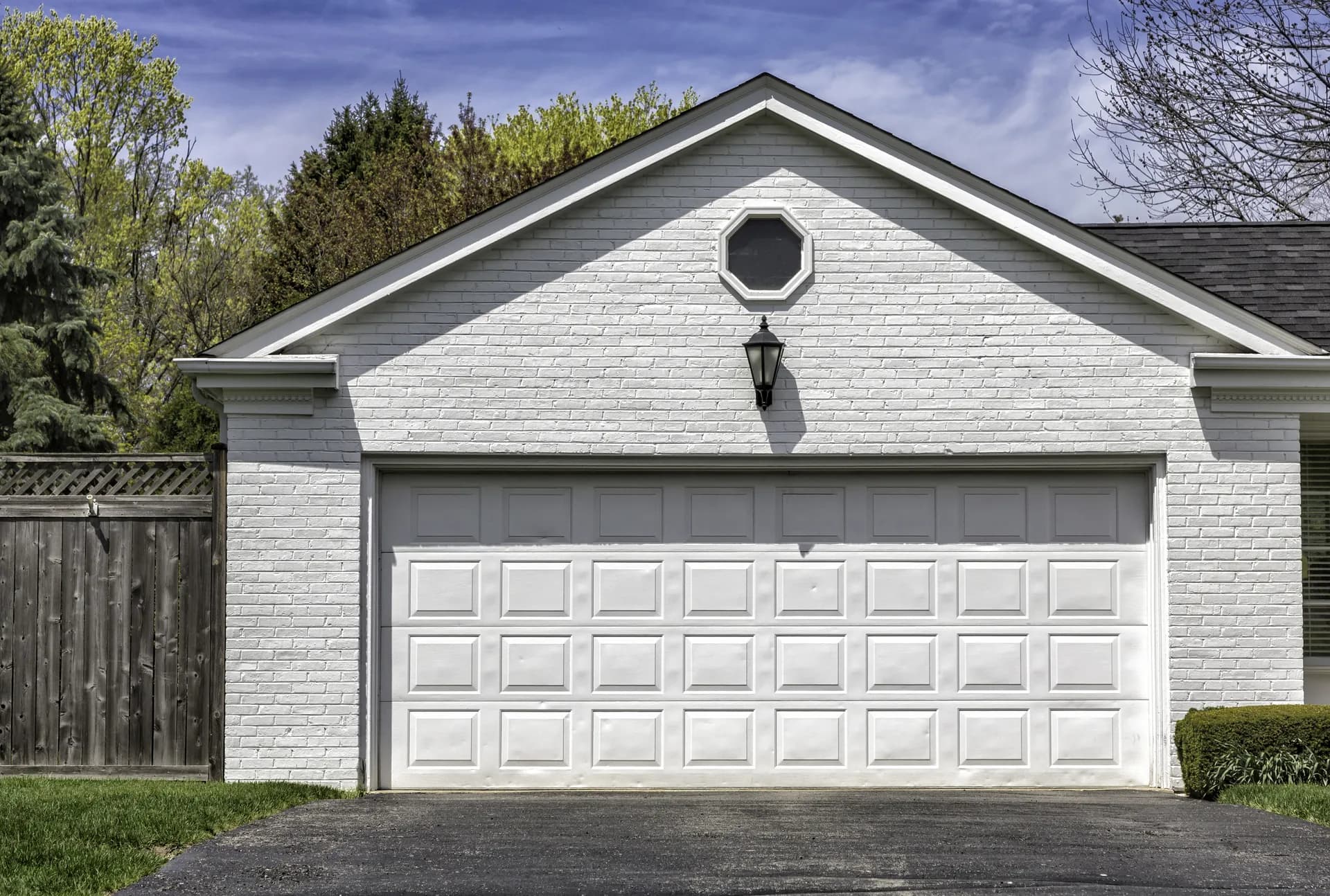
San Gabriel has an old body of housing by Southern Californian standards, and garage doors do not get replaced on any regular schedule. They get replaced when they fail badly enough to force the issue. The result is a city full of doors that have been hanging in the same opening for decades, fitted by installers who are retired, supplied by distributors that have closed, and built by manufacturers who were absorbed, renamed or wound up long ago. There is frequently no label left on the door, or a label so faded that nothing can be read off it, and the paperwork went with a previous owner three sales back. From a repair point of view the door is anonymous. It has no model number, and there is nothing to type into anything.
That sounds worse than it is, because most of what fails on a garage door is generic. Torsion springs are made to wire diameter, inside diameter, wound length and hand of wind — four measurements, all of which can be taken or derived on site. Lift cables are a diameter and a length. Drums are a numbered casting, and the number governs the drum's cable capacity and the door height it will lift. Bearings, rollers, hinges, end and centre bearing plates, bottom fixtures and track are dimensional items that have been standardised across the trade for a long time. None of that hardware cares who made your door. It cares what your door weighs, how tall the opening is, how thick the sections are and what radius the track turns on, and every one of those is a measurable fact rather than a lookup.
The part that is genuinely not generic is the door itself. Section profiles were proprietary — the depth and shape of the raised or recessed panel, the embossing pattern pressed into the steel, the width of the stiles, the way the top and bottom of each section interlock with its neighbours, and the section height, which was not standard across makers and is often not standard even within a single door's own family. When a section is damaged, that is where the trouble starts. There is no equivalent section available, because the tooling that pressed it was scrapped when the company closed, and a section from another maker will not interlock, will not line up and will not match the face. A door can be mechanically perfect and still be unrepairable in that one specific way.
So every job on an old San Gabriel door sorts into one of two piles almost immediately. If the fault is in the mechanism — spring, cable, drum, bearing, roller, hinge, bracket, track, opener — the door is repairable, and it is repairable more or less indefinitely, because everything in that list is specifiable from measurement and stocked as generic hardware. If the fault is in a section, we are at a fork in the road that has three honest routes and no obvious winner. Openers, incidentally, sit firmly in the first pile and are the least of anyone's problems: a modern operator will run a fifty-year-old door perfectly well, so an obsolete opener is almost never a reason to replace a door that is otherwise sound.
What we fix most often in San Gabriel
A damaged section on a door nobody makes any more
The defining San Gabriel problem. A vehicle, a storm, a failed cable or simple corrosion has ruined one section of a door that is otherwise in serviceable condition, and there is no replacement section to buy because the profile, the embossing and the section height all belonged to a manufacturer who is gone. There are three honest routes and we will lay all three out rather than steering you. A salvaged section from a matching door can be sourced sometimes, and when it can be found it is the best outcome — but availability is genuinely uncertain and the finish will differ from a door that has weathered in place for decades. The existing section can be repaired structurally, with the end stiles, struts and hardware brought back to sound condition, which restores strength and leaves you with a visible cosmetic result you have to be willing to live with. Or the door is replaced, which resolves appearance and brings a warranty on the whole assembly and a supply of parts that will still exist in ten years. Each route costs you something different in outcome, and the decision is yours to make once you know what those costs are.
Hardware with no catalogue entry, replaced by measurement instead
Owners are often told that nothing can be done because the door cannot be identified, and that is not true of the mechanism. We do not need to know who made your door in order to fit it with springs, cables, drums, bearings, rollers, hinges or track. We need the weight of the door, the height it travels, the wire diameter and inside diameter and length of the existing spring, the drum number or the cable capacity it has to provide, the roller stem diameter and wheel size, the hinge number that suits the section thickness, and the radius the track turns on. All of those are taken on site with a tape, a caliper, a scale and a coil count. What comes off the van afterwards is generic hardware specified to those measurements, and it will outlast the door it goes onto.
Track and section heights that do not match anything current
Old doors turn on track radii and run on section heights that are not always what a modern kit assumes, and this catches people out when a previous repair has been done from a box rather than from a measurement. We find horizontal track of one radius spliced to vertical track cut for another, hinges sized for a section thickness the door does not have, and rollers whose stems are too short for the sleeve they are sitting in. The door still runs, after a fashion, but it runs binding — and everything downstream of that bind wears at a rate nobody can explain. Correcting it means measuring what the door actually is and specifying track, hinges and rollers to those numbers, rather than fitting whatever the current standard kit happens to contain.
An obsolete opener bolted to a perfectly sound door
This one is good news and it is worth stating clearly, because it is the point at which people are most often sold something they do not need. An operator whose logic board is unobtainable, whose remotes cannot be replaced, or which predates rolling-code security is genuinely at the end of its useful life — but it has nothing to do with the door hanging below it. A modern operator does not care what year the door was made or who made it. It cares what the door weighs and how far it travels, both of which we measure. So an obsolete opener on a sound door is a straightforward operator replacement on an existing door, not the opening move in a conversation about a new door, and anybody who tells you otherwise is arguing from something other than the mechanics.
San Gabriel garage door FAQs
- That is settled by whichever technician happens to be closest to you at the moment you ring, and by nothing else. No van is starting a journey from one central point to cover the whole territory, so the dispatcher looks up where the nearest one currently is, weighs the roads between there and you — I-10 and SR-60 both feed this part of the county — and quotes accordingly. Where the truthful figure is worse than you wanted, the truthful figure is what you will be quoted.
- For almost everything mechanical, no — it makes no difference at all. Springs, cables, drums, bearings, rollers, hinges, brackets and track are specified from measurements taken on your door rather than from a model number, so an unidentifiable door is a perfectly ordinary repair. The one place identity genuinely matters is a damaged section, because panel profiles and section heights were specific to the maker and cannot be matched from generic stock. If your fault is mechanical, the age and origin of the door are close to irrelevant.
- Three, and we will explain all three rather than recommending one. A salvaged section from a matching door, where one can be found — best appearance, uncertain availability, and the finish will not have aged the same way yours has. A structural repair to the existing section, which restores strength and keeps the door in service, with a cosmetic result that will be visible and that you should look at before agreeing to it. Or a new door, which resolves both appearance and longevity, comes with a warranty across the whole assembly, and puts you back on a parts supply that will still exist in a decade. We will show you the section, explain what each route leaves you with, and let you decide.
- Almost certainly not, and this is the most common unnecessary expense in this trade. A modern operator will run an old door perfectly well provided the door is balanced and its mechanism is sound; the operator is specified to the weight and travel of the door, not to its vintage or its manufacturer. So the honest answer where the door is sound is a new operator on the existing door. Where we do recommend both, it is because the door itself has a structural problem, and we will show you what that problem is before saying so.
- We hold a licence, we carry insurance and we are bonded, and any of that can be supplied on paper before work begins if you want it on file. The diagnosis carries no charge at all. Somebody comes out, measures the door, works out what has actually failed and hands you the part so you can look at it yourself. The estimate that follows is written, with the parts listed apart from the labour. Read it, decide against it, and that is the end of the matter — you owe nothing.
Request service
Fast callback during business hours. For urgent safety issues, call now.