Downey Garage Door Repair
Garage Door Installation in Paramount, CA
Installation in Paramount, Los Angeles County. Technicians work across the area, so when you call we send whoever is nearest to you.
Open 24/7 for emergencies
Free diagnostic estimate on every call-out
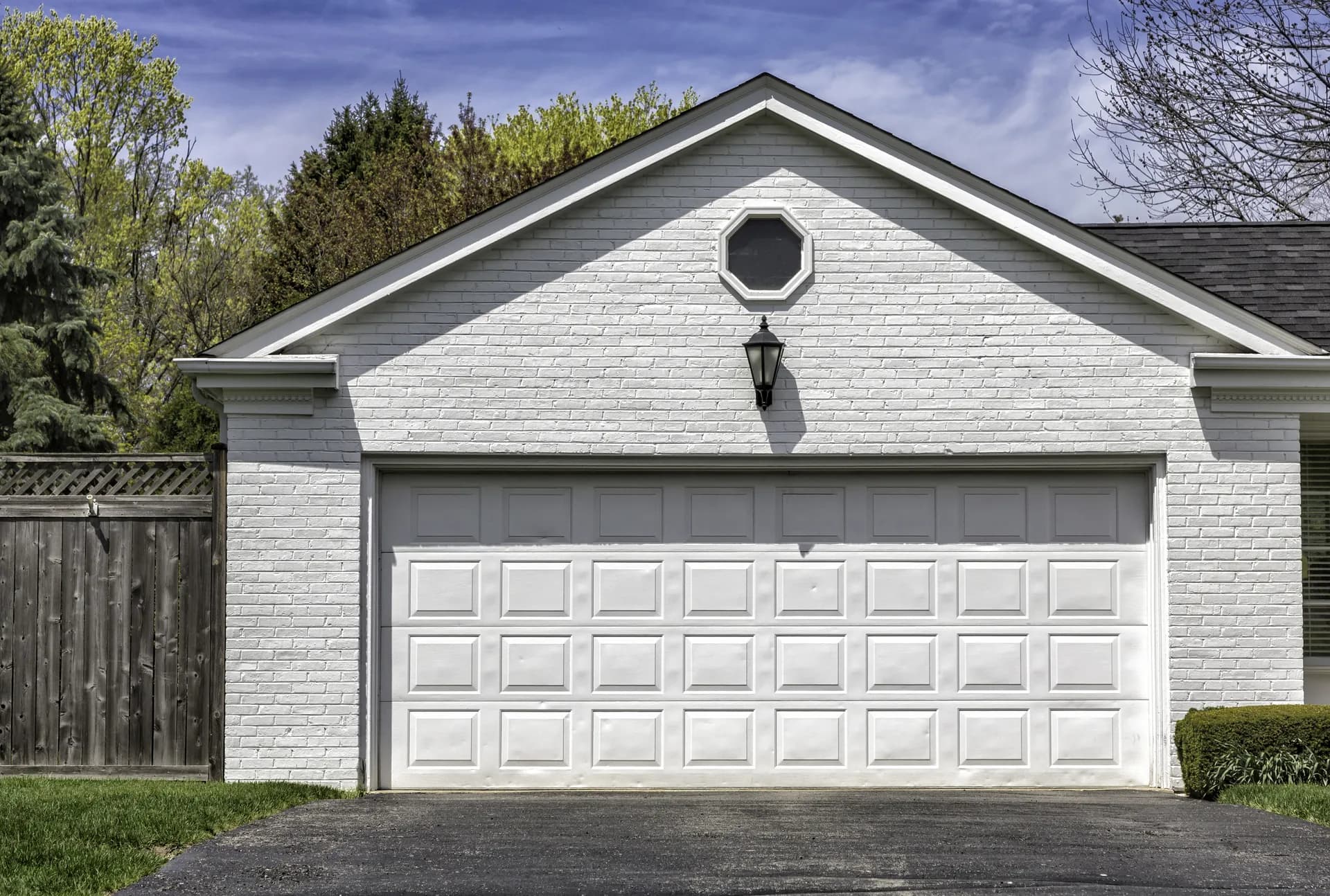
On a single-storey house the garage door is a very large share of what the street sees — it is usually the biggest flat surface on the elevation by some margin, which is why a replacement changes the look of a house more than owners expect, for better or worse.
Installation day is also the exact moment the mismatch this city is full of gets created. A new door goes on, the existing opener still works, nobody reads its rating, and a problem is quietly built into the garage that will surface as a sudden opener failure some years later. Preventing that costs one measurement and five minutes.
The measurement that prevents the next decade of trouble
We weigh every door we fit, at the point where the spring tension is off and before the system is commissioned, using a scale under the bottom section. That figure does two jobs. It is the basis for the spring calculation, and it is the number we compare against the rating plate on the opener that is staying. Doing it any other way — estimating the weight from the door's width, or assuming the new door is roughly like the old one — is precisely the shortcut that produces an under-rated opener, and it is why so many garages in this city are running one.
The comparison matters here more than in most places because of what a replacement door usually is. The doors coming off are frequently light: single-skin steel sectionals, and in older garages one-piece tilt-ups. The doors going on are frequently insulated and double-skinned, for good reasons that have to do with rigidity, noise and the temperature of a garage that is also a laundry and a workshop. That is a real increase in mass, on the same rail, driven by the same motor, with the same rating plate it had the day before.
If the existing opener is comfortably rated for the finished weight and the rail, trolley and drive gear are sound, we will happily keep it and tell you so — there is no reason to sell a unit that is going to do the job. If it is not rated for it, you will see the two figures side by side rather than an opinion, along with what running it over rating actually costs in service life. The choice stays yours. What we will not do is fit the door, say nothing, and leave you to discover it in five years when the springs drift and the motor gives out.
Specifying the springs and the door itself
The spring package is calculated from the door being fitted, never carried over from the door coming off, and this is where the most damage in the trade gets done because the two are so rarely the same weight. Wire diameter, inside diameter and wound length all follow from the measured weight cross-checked against travel height and drum diameter. A spring wound for a lighter door and asked to counterbalance a heavier one is over-loaded from its first cycle, and it hands the shortfall straight to the opener, which is how a fresh installation produces a stripped drive gear inside a couple of years.
On the door, insulation is worth a decision rather than a default. Where the garage is also the laundry, the store and the household's everyday way in and out — the normal arrangement in these houses — a polyurethane-cored sectional closed with a steel back skin keeps that room tolerable through an inland summer and moves with markedly less noise. There is a mechanical argument for the back skin as well. Enclosing a section on both faces makes it considerably stiffer, and stiffness is what keeps a door from bowing across the opening and feeding uneven load into its hinges and end stiles. It also gives the door an inner surface that can take the everyday knocks from bins, bicycles and the corner of a workbench, instead of every one of those arriving as a permanent dent in the face the street sees.
On appearance, the useful thing is to stop looking at catalogues and stand at the kerb. Look at what the roof line, the window proportions and the entry are already doing, and choose a profile that agrees with them. Clean long-panel and flush steel doors sit comfortably on this city's single-storey elevations, and stamped-steel carriage styling is a legitimate option that carries none of the weight or maintenance burden of real timber — which also keeps the mass, and therefore the demand on the opener, within a range that is easier to specify around.
How the day runs, and what commissioning actually means
The old door and its accumulated hardware come out, the opening gets looked at properly in daylight, and the header and jambs are assessed before anything is fixed into them — in a garage that has already accepted two or three generations of hardware, old lag holes tend to cluster exactly where a new centre bearing plate wants to go. Tracks are set plumb and square to the door path and packed out to the jambs rather than screwed flat onto whatever previous installers shimmed. Sections go up one at a time with hinges and rollers fitted as we go, and the torsion system is wound to the calculated turns.
Then the door is balanced and tested by hand with the opener disconnected, before any motor is asked to compensate for anything. A correctly balanced door moves under modest hand pressure and holds wherever it is left. Only once that is true does the opener get reconnected, and only then do the travel limits and force settings get set — to the door as it now is, from scratch, not left at whatever they were carrying for the door that came off. An opener that has spent years on a heavy, drifting door usually has its force wound well up, and putting those settings onto a new, correctly balanced door is how you end up with a brand new installation that will not stop for an obstruction.
Commissioning finishes with two separate tests, because they check different systems. The photo-eyes are verified by breaking the beam during a close cycle. The contact reversal is verified by laying a solid object flat on the floor in the door's path — a short length of timber on its side, about an inch and a half thick — and confirming the door meets it, stops and returns promptly. We do both in front of you and show you how to repeat the second one, because it is the one that needs running monthly for the life of the door. Before we go you are shown how the manual release works, taught the balance check worth running twice a year, and handed the warranty paperwork together with a specification sheet carrying the measured door weight, so that whoever works on this garage next has the number in front of them. Most single or double replacements finish within the day.
Installation in Paramount — FAQs
- Often yes, and it depends on a number rather than a judgement. We check the opener's rated door weight against the weighed mass of the door going on, and we assess the rail, trolley and drive gear for the life left in them. If it clears the rating and the mechanics are sound, keeping it is the sensible choice and we will say so. If it does not clear the rating, we will show you both figures. Fitting a heavier door onto an opener specified for a light one is the single most common way this problem gets created, and installation day is the only convenient moment to avoid it.
- Because it is the number everybody afterwards needs and nobody can retrieve without taking the tension off the springs. It determines the spring specification, it determines whether an opener is adequately rated, and it settles arguments years later when somebody is deciding whether a fault is a component at end of life or a system running over its capacity. Handing it over on the specification sheet costs us nothing and saves the next technician — us or anyone else — an hour of work and a guess.
- Surveying and writing the estimate happen on a single visit. What follows depends on the door itself — stock sizes and standard finishes move quickly, while a special finish or anything made to measure adds time, and the date quoted at the estimate is the realistic one rather than the encouraging one. Fitting is normally one day, in the region of four to six hours, taking in the balancing, the opener commissioning and both safety tests. It runs longer where the header or jambs need attention first, and you will have heard about that at the estimate rather than on the morning.
Other garage door services in Paramount
Request service
Fast callback during business hours. For urgent safety issues, call now.