Downey Garage Door Repair
Garage Door Opener Repair in Maywood, CA
Opener Repair in Maywood, Los Angeles County. Technicians work across the area, so when you call we send whoever is nearest to you.
Open 24/7 for emergencies
Free diagnostic estimate on every call-out
Opener complaints arrive in three shapes: dead silence when the button is pressed, a motor that runs while the door sits still, or a door that starts closing and changes its mind. All three are diagnosable in an orderly way, most have answers far cheaper than a new unit, and the sensible sequence is always mechanical before electronic — an opener blamed for a binding door is the most expensive misdiagnosis in this trade.
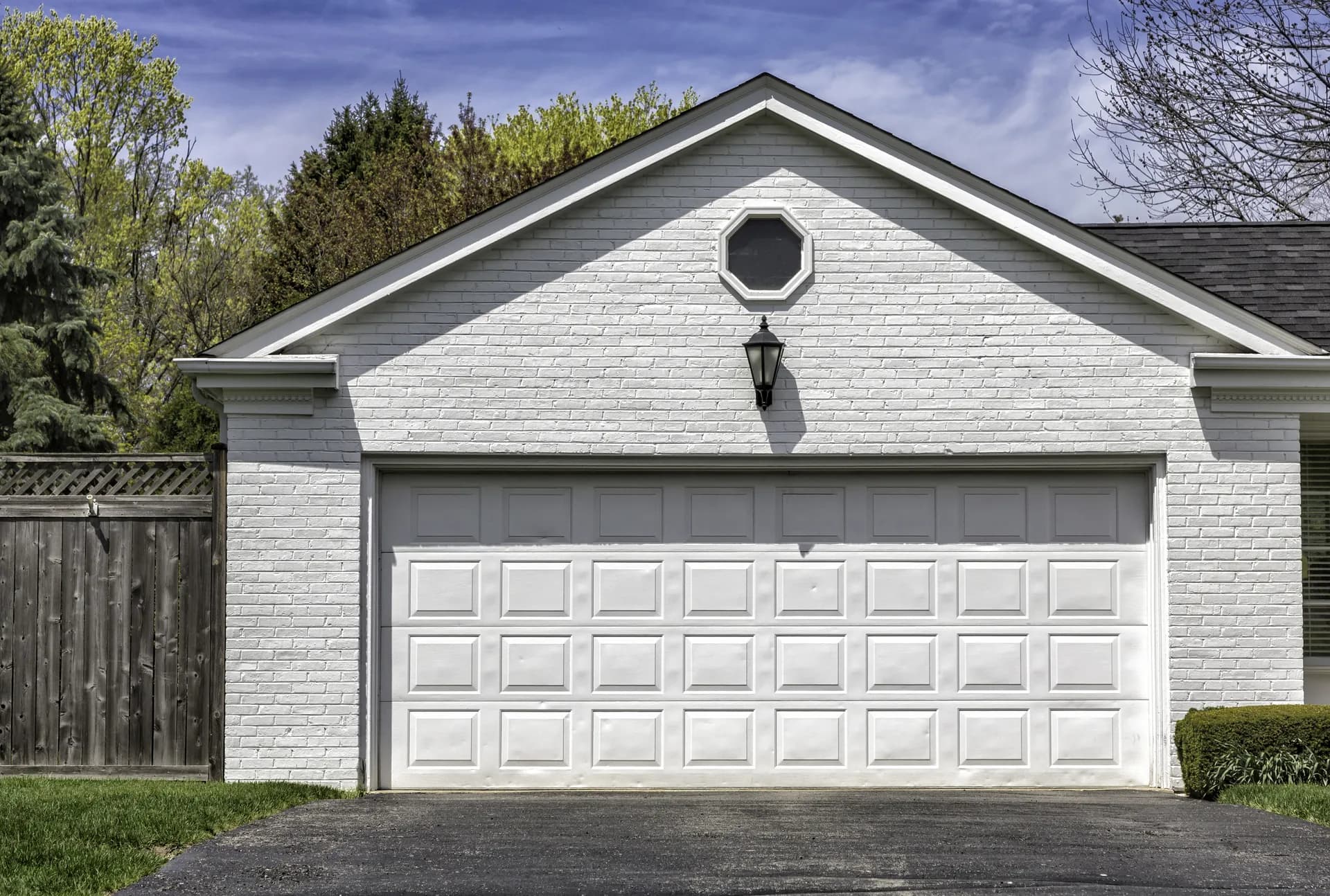
In Maywood the opener carries a weight it does not carry in most cities, and it is worth naming before any talk of gears and boards. Where a garage stands wall-to-boundary with no room for a side door, the garage door is the only way in — which makes the opener not a convenience but the key to the building. A failed opener elsewhere means lifting the door by hand for a week. Here it can mean being locked out of your own garage, and everything on this page is written with that in mind.
When the opener is the key to the building
Walk the walls of many Maywood garages and you will find no second door, for the simple reason that a door needs somewhere to open onto and these walls stand against fences and lot lines. In that building the opener sits in the path of everything: a power cut, a failed logic board or a stripped gear does not merely inconvenience you, it separates you from the car, the tools, the freezer, the stored household — whatever the garage holds, which here is usually a great deal. The repair conversation in this city therefore starts one step earlier than usual, with a blunt question: if this unit quits at the worst moment, how do you get in?
There are two pieces of hardware that answer it, both modest, both standard catalogue items, and both under-fitted in this city. The first is battery backup: an opener with its own battery rides through a power cut and gives you dozens of cycles while the grid is down, which on a garage with no other entrance is not a luxury feature. The second is an exterior emergency release — a small keyed cylinder through the door face connected by cable to the opener's release mechanism, so that the trolley can be disconnected from outside and the door lifted by hand. On a garage with a side door, that kit is an extra. On a garage where the main door is the only door, it is the difference between a nuisance and a locksmith-grade lockout, and we recommend it plainly whenever we see the situation.
The same logic reshapes maintenance advice. The manual release inside the garage should be tested occasionally everywhere; here it should be tested monthly, with the door down, because it is your exit mechanism as much as your entry one. And the opener's condition deserves attention slightly ahead of failure rather than slightly behind it: on this building, a unit that has started grinding, hesitating or dropping remotes is not drifting toward inconvenience, it is drifting toward a lockout, and the honest advice is to deal with it while the door still opens.
Working on an opener inside a packed, closed box
The diagnosis itself follows the order that protects your wallet. First the door, by hand, with the trolley released: if the door is heavy, binding or out of balance, the opener has been straining against a mechanical fault and the opener is not the patient — force settings that someone has wound up over time are the classic fingerprint, and we treat them as evidence of a mechanical problem, not as a knob to turn further. Only when the door swings sweetly by hand does attention move up the ladder: safety sensors and their wiring, then the drive train, then the electronics, in that order, because that is cost order.
The photo-eye check has a Maywood flavour, because the few inches of wall beside each jamb — the only mounting real estate the sensors have — is also the most contested storage space in a garage that holds a household's everything. Eyes get nudged out of alignment by things set down beside them, beams get crossed by items that migrate into the opening's plane, and low-voltage wire runs get pinched behind shelving that was pushed hard against the only wall available. A door that opens normally but refuses to stay closed has this written all over it, and the fix costs little; we align, test, and secure the wiring where the storage cannot lean on it, rather than just clearing the beam and leaving the next box to block it again.
One practical discipline runs through every opener job here, the same one that governs all our Maywood work: the technician never puts himself, or you, on the wrong side of a door that might not reopen. Cycling tests on a suspect unit are run with the door's manual release proven first and the opening kept passable; a unit being condemned is condemned with the door parked open, not shut. It sounds like caution for its own sake until you have stood in front of a garage whose failed opener held the only entrance closed — after which it sounds like the obvious rule it is.
Repair or replace, decided honestly
Most of what fails in an opener is repairable at sensible cost, and we carry the parts that actually fail: drive gear kits for the units that strip their nylon gears, sensors and wire, capacitors, remotes and receiver modules, trolleys and chains and belts. A motor that hums without turning is usually a start capacitor, not a dead motor. A unit deaf to its remotes but obedient to the wall button is a receiver or handset problem, not a replacement. We test in cost order and quote what the test found, and if the honest total says repair, you get repair — the van is stocked from our own parts room at 8232 Nance St in Downey precisely so that small answers can happen on the first visit.
Replacement earns its place on narrower grounds: a logic board that is obsolete and unobtainable, a motor genuinely worn out, or a unit old enough to predate rolling-code remotes — worth taking seriously on any door that is the sole entrance to a building, because a fixed code can be captured and replayed by cheap hardware, and on this building that code is the front door key. When replacement is the answer, the specification writes itself from the geometry: battery backup as standard, an exterior keyed release fitted at the same visit, and rolling-code security as a floor, not an option.
One more specification note that this city earns: noise. A Maywood garage commonly shares its airspace with the neighbouring structure across a gap you could not walk through, and sometimes shares a wall line with rooms of its own house; a chain-drive unit rattling on a rigid mount broadcasts into all of it. A belt-drive unit on resilient mounts, with the door itself running on nylon rollers, brings the mechanical noise down to something a close neighbour never hears. It costs a little more at the estimate and buys a great deal of peace across a very small gap, and we will tell you honestly whether your building is one where it matters.
Opener Repair in Maywood — FAQs
- Two pieces of hardware close the gap. A battery backup keeps the opener working through an outage — modern units run dozens of cycles on the battery. An exterior emergency release, a small keyed cylinder through the door face cabled to the opener's release, lets you disconnect the trolley from outside and lift the door by hand even with everything dead. On a garage with no other entrance we recommend both, and fitting them is a routine visit, not a project.
- Probably not, and do not buy one before the door itself is tested. Pull the manual release and lift the door by hand: if it is heavy or fights back, the opener has been straining against a balance or friction problem — usually a tiring spring, dry rollers or track trouble — and a new unit would strain identically. If the door floats sweetly by hand and the opener still labours, then the unit earns the attention: drive gear, capacitor, motor, in that order. The test takes a minute and reliably saves the cost of the wrong purchase.
- That is the opener deciding the floor is an obstruction, and the usual causes are drifted travel limits or a close-force setting now too tight for how the door actually runs — both adjustments, not parts. In this city there is a physical suspect worth checking first: the damp slab corner near the gap between buildings can swell the bottom seal or leave grit where the seal lands, so the door meets resistance a fraction early on one side. We check the slab line and the seal before touching the settings, because settings adjusted to mask a physical cause always drift back into trouble.
Other garage door services in Maywood
Request service
Fast callback during business hours. For urgent safety issues, call now.