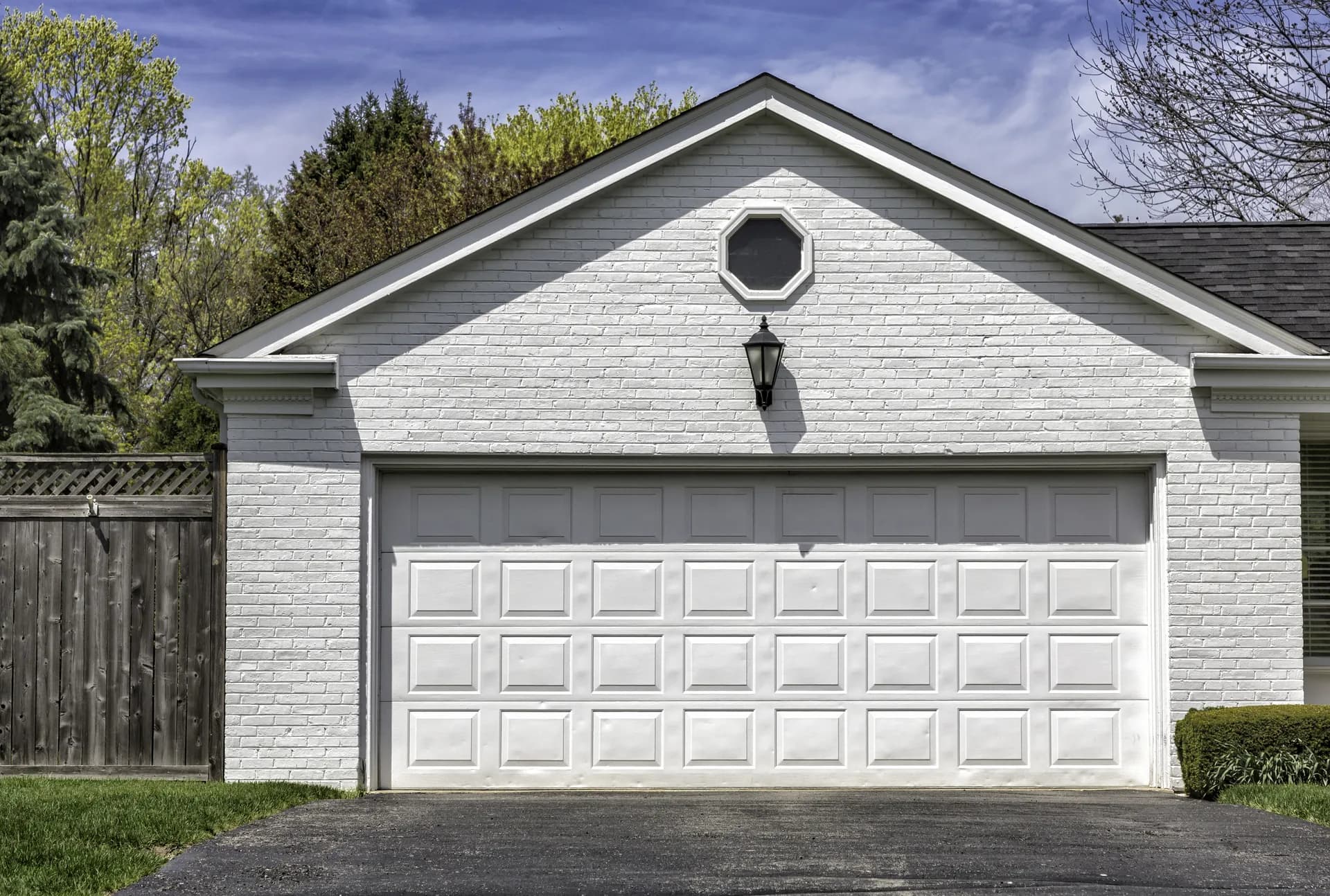
Downey Garage Door Repair
Maywood Garage Doors, Worked On From the Inside
Technicians working across Maywood and Los Angeles County — not dispatched from one address. Local routes via I-710.
Open 24/7 for emergencies
Free diagnostic estimate on every call-out
Ring us and the person answering first checks where every technician on shift actually is before saying anything about time. Our people hold positions all over the coverage area instead of queuing at a depot, so the window you hear is assembled from whichever technician is closest to you right then, plus the traffic between you — nothing else goes into it. Behind the phone stands our building at 8232 Nance St, Downey: the parts floor and spring inventory the vans load from, and for a Maywood booking the van gets loaded with this city's particular geometry in mind.
Maywood is one of the smallest cities by area in Los Angeles County, and its parcels were built out to their edges a long time ago. Seen from a garage door van, the practical result is blunt: a Maywood garage very often has no outside. Its side walls stand a hand's width from a fence or from the neighbouring structure, its back wall can be the property line itself, and the only face anyone can stand in front of is the one with the door in it. Every operation this trade normally stages from around a building has to be staged from within this one, and that changes more about the work than most companies realise before they arrive.
The garage you can only work on from the inside
Stand in front of a typical Maywood garage and count the faces you can touch. The front, with the door in it. Nothing else. One side wall runs along a fence close enough that a cat has to think about it, the other may be separated from the neighbouring building by a gap that has never had a person in it, and the back wall commonly stands on or against the lot line. This is not neglect and it is not unusual here — the parcels are small, the city was densely built early, and putting the garage hard against the boundaries was the only way to keep a usable yard. But it quietly rewrites the assumptions almost every garage door procedure is written on, because those procedures assume a technician can walk around the structure, and here he cannot.
Inside-only access changes the mechanics of the work itself. Vertical track is normally checked by sighting along it from angles; here it is checked from within, with the door in whatever position exposes the length being measured, sometimes with the door closed and the technician working in a box lit by a work lamp. Cable inspection at the bottom fixtures happens crouched between the car's parking space and the wall. Seal replacement on the jambs is done from the front plane only, because the outer face of each jamb cannot be reached. None of this makes a job impossible and very little of it makes a job worse — but it changes the tooling that has to come in, the order the steps can happen in, and how long the work honestly takes. A firm that quotes Maywood timings from an average suburban garage is guessing, and the guess is always low.
The second consequence is slower and harder to see, which is exactly the problem: the faces nobody can reach are the faces nobody maintains. The weather side of a garage door gets repainted when someone stands in front of it with a brush, and the outer faces of the side and back walls get looked at when someone walks past them. On a garage with no outside, neither thing has happened in decades. The exterior skin of the door itself is usually fine, because it faces the one open side — but the outer edges of the frame, the trim at the corners, and the wall bases beyond the jambs age completely unseen. Corrosion and rot on those surfaces is found late, usually when it has already travelled through to something that can be seen, and by then the repair is bigger than it needed to be.
The third consequence is water. The gap between a Maywood garage and whatever stands beside it is a channel nobody can enter, and it collects everything two roofs shed into it. Gutters overhang it, the neighbouring roof pitches toward it, leaves settle in it and never leave, and the strip of ground at the base of the wall stays damp long after the street has dried. The slab edge nearest that gap wicks the moisture, the bottom of the wall framing sits in it, and the hardware fixed low on that side of the garage — track lags, bottom bracket fixings, the ends of the seal retainer — lives in permanently damp air. We cannot regrade a gap no one can stand in, and we do not pretend otherwise. What we can do is know that this is the environment, inspect the low fixings on that side every visit, and choose materials for it deliberately rather than by catalogue default.
What we fix most often in Maywood
Exterior surfaces that age without witnesses
On most houses, damage to the weather side of a garage door or its frame gets noticed from the driveway within a season. Here, the outer faces of the jambs and the trim edges beyond them are invisible from anywhere a person can stand, and the first evidence arrives indoors: a rust stain bleeding through at a fixing, daylight at a corner that used to be tight, a jamb that has gone soft enough that the track lags turn without biting. By the time a hidden face announces itself on the visible side, it has usually been failing for years. We probe the frame from the reachable plane — the front — and from inside, and we tell you what the concealed faces are doing based on what a blade and a moisture reading say rather than on what anyone can see, because nobody can see it.
Hardware living over a permanently damp slab edge
The slab corner nearest the gap between buildings stays damp because the gap never dries, and the hardware bolted low on that side shows it first. Bottom brackets — the fittings that anchor the lift cables and carry real load — corrode at the fixing holes. Track lags rust in place, which reads as security until the day one is asked to take a shifted load and shears instead. The bottom seal's retainer furs up with white oxide on the damp end and grips the seal unevenly, so a new seal fails early at the same corner the old one did. On Maywood visits we treat the damp-side bottom corner as its own inspection point, and when we replace hardware there we use fixings specified for wet service, because that corner is wet service, whatever the catalogue assumes.
A stuck door that locks out its own repair
Plenty of garages here have no second door, because a side door needs a side to open onto and these walls stand on the lot line. In that building, the garage door is the only entrance, and a door jammed shut is not an inconvenience — it stands between you and everything the garage holds, and between us and the mechanism that needs fixing. It also cannot be attacked the way a stuck door is opened elsewhere, because there is no room outside the structure to work leverage from and no back or side route to the hardware. Opening it safely, from the one accessible face, without wrecking the door in the process, is a genuine procedure with its own sequence, and it is one we carry out often enough in this city to have it down cold. What it should never be is improvised with a pry bar in a doorway with no swing room.
Work staged entirely from within four close walls
Every repair in this city shares one requirement before a tool comes out: the inside of the garage is the workshop, because there is no other space. That means the car comes out first, a working strip gets cleared along whichever wall carries the fault, and anything stacked against the door itself is moved before the door is asked to travel. It also means the technician plans the job so he is never trapped by it — a door that must be immobilised for track work gets immobilised in a position that keeps the exit usable, which is a sequencing discipline most territories never require. Telling us on the phone what the garage holds and whether the car is in or out is not small talk. It decides how the eventual visit runs and how honest our time estimate can be.
Maywood garage door FAQs
- As fast as the closest technician can finish what is in front of him and drive to you — that is the whole formula. Nobody rolls out of a central yard: the vans hold positions around the map all day, the dispatcher reads that map when your call lands, and the quoted window comes from real positions and real traffic. When every nearby van is committed and the real window is long, you hear the long window. We do not shade the number to make a booking happen.
- Yes — that is the normal condition here, not an obstacle to it. Track, cables, springs, rollers, seals and opener work are all serviceable from inside the garage, and our Maywood jobs are planned that way from the booking call onward. What we ask from you is interior space: the car out if it can come out, and a cleared strip along the wall that carries the fault. What you should expect from us is a time estimate that already accounts for inside-only working, instead of a suburban estimate that falls apart on arrival.
- Treat it as our problem rather than yours, and do not force anything in the meantime. Prying at a jammed door from a doorway with no working room bends track and splits jambs, and it usually makes the eventual opening harder. Depending on what has failed, we can often release or free the door working through the front face without damage; where the mechanism itself has let go, we open a deliberate, controlled access and replace what that costs, which is always cheaper than a levered frame. Tell the phone what the door did last, whether the car is inside, and whether the garage has any other entrance, and the technician arrives carrying the right approach.
- It becomes one, at the bottom corner nearest the gap. Nobody can clear or regrade a space no one can stand in, so that strip stays damp, and the damp works on the slab edge, the base of the framing and every fixing bolted low on that side. What we can do is real but specific: inspect that corner on every visit, replace corroded bottom-corner hardware with fixings rated for wet service, and choose seal and retainer materials that tolerate a wet slab edge. What we will not do is sell you a fix for drainage we cannot reach — we would rather tell you plainly which part of the problem is ours to solve.
- No. The diagnostic visit costs nothing and commits you to nothing: the technician finds the fault, hands you the actual part that failed instead of gesturing at the ceiling, and writes up an estimate with parts and labour broken out as separate lines — all before anything is dismantled. Walk away at that point and you owe nothing. On credentials: licensed, insured and bonded, with the paperwork available in writing whenever you would rather see it than take our word.
Request service
Fast callback during business hours. For urgent safety issues, call now.