Downey Garage Door Repair
Garage Door Installation in Lakewood, CA
Installation in Lakewood, Los Angeles County. Technicians work across the area, so when you call we send whoever is nearest to you.
Open 24/7 for emergencies
Free diagnostic estimate on every call-out
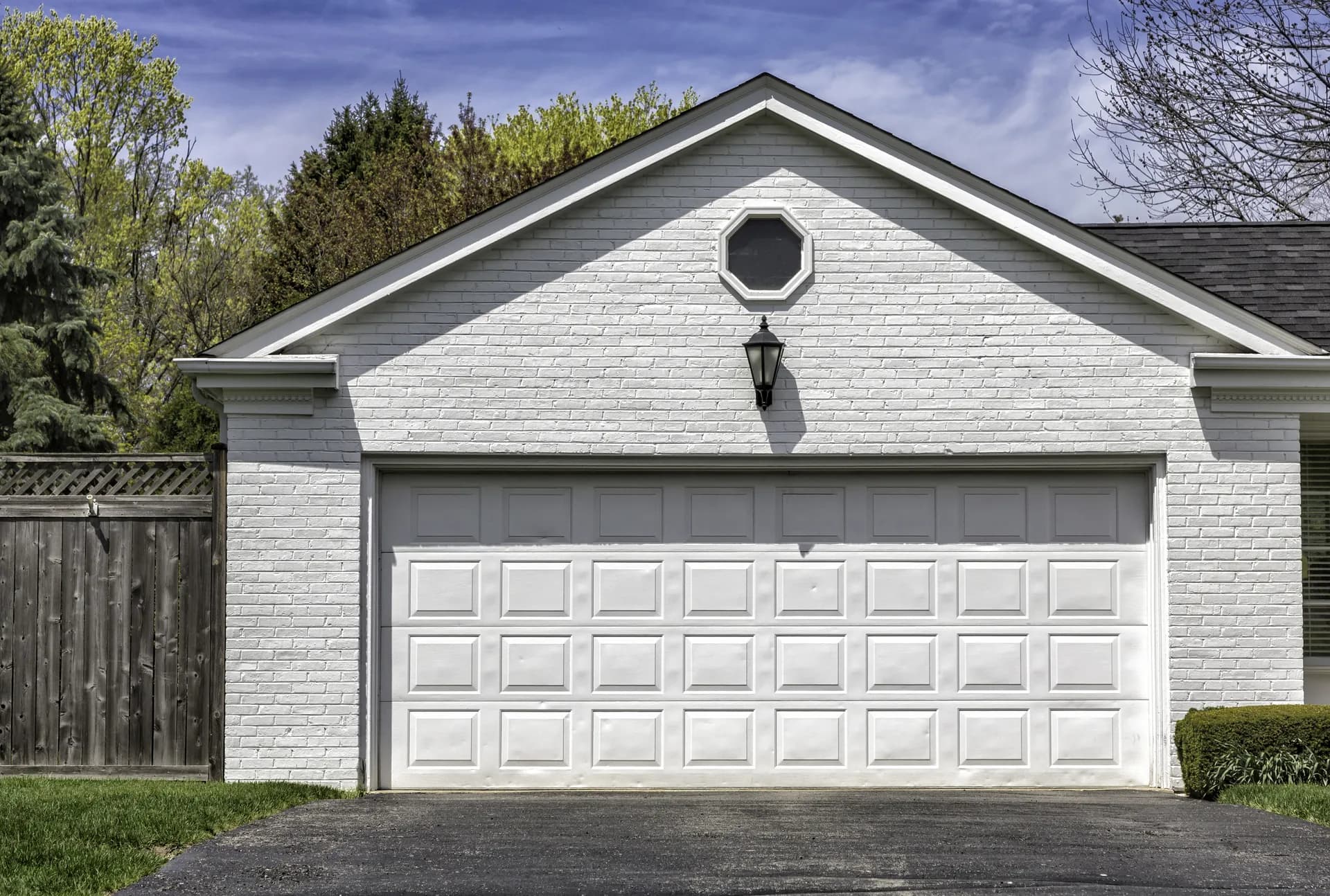
On a single-storey Lakewood house the garage door is a very large share of what the street sees. These are compact homes with a modest frontage, and the door is the biggest flat surface on the elevation by some margin — which is why a replacement changes the look of the house more than owners expect, for better or worse.
The part that matters more, and gets less attention, is what the door is being hung on. In a garage that has already accepted three or four generations of hardware, the condition of the opening is the job. The door is the easy half.
Assessing framing that has been worked on for seventy-five years
We measure the same five things on every installation — opening width and height, headroom above the header, backroom into the garage, and sideroom on each jamb — and in this city we can usually predict four of them before arriving. That is not a reason to skip them; it is a reason the survey can spend its time on the thing that actually varies, which is the condition of the timber.
Every previous door change in this garage has been fixed into the same header and the same jambs, at roughly the same heights, because every installer works to the same standard dimensions. Three or four generations of that leaves a header with a cluster of old lag holes concentrated exactly where a new centre bearing plate wants to go, and jambs perforated along the vertical track line. Most of the time the timber is still sound and it is simply a matter of placing new fixings into solid material and packing correctly. Sometimes it is not — a split running between two old holes, or a jamb that has softened at the base where the laundry has kept the corner damp for decades — and that has to be dealt with before a spring is wound against it.
Where the opening has been widened at some point, which is common because these garages were framed for a much narrower car, the header work becomes the first question rather than an afterthought. Somebody cut the original opening and supported the new span, and the quality of that work varies enormously. We look at it before quoting, and if it needs attention it appears on the written estimate as an itemised line rather than as a conversation halfway through the installation day.
Choosing a door for a small single-storey house
Insulation is worth a decision here rather than a default, and the reason is how these garages are used. When the room behind the door is the laundry, the tool store and the household's everyday route in and out, its temperature stops being irrelevant. A polyurethane-cored sectional with a steel back skin makes the space genuinely usable through an inland summer, runs noticeably quieter than a single-skin door, and — because the garage in these plans usually shares a wall with a bedroom or a living room — that reduction in operating noise is heard inside the house rather than only in the garage.
The back skin matters for a second reason that has nothing to do with heat. A double-skinned section is far more rigid than a single-skin one, and rigidity is what stops a door flexing across its width and loading its hinges and end stiles unevenly. In a garage where the door is also getting knocked by bikes, bins and a workbench, the back skin takes that abuse instead of the outer face carrying a dent for the next twenty years.
On appearance, the useful thing to notice is that this city was designed so that a street reads as a set while individual houses vary at the front. That gives you real latitude — clean long-panel or flush steel doors sit comfortably on these elevations, and stamped-steel carriage styling is a legitimate choice that carries none of the weight or maintenance of real timber. What is worth avoiding is a profile chosen from a catalogue in isolation. Stand at the kerb and look at what the roof line, the windows and the entry are already doing, then pick a door that agrees with them.
Specifying the springs and running the day
The spring package is calculated from the door being fitted, not from the door coming off. This is the point at which the most damage gets done in this trade, because the two are so rarely the same weight in a city where doors have been swapped independently for decades: a new insulated double-skinned door is considerably heavier than the single-skin sectional it usually replaces, and heavier again than the original tilt-up that preceded both. Carrying the existing spring package over because it is still intact means the system runs over-loaded from the first day and takes the opener with it inside a couple of years. We weigh the finished door, cross-check against travel height and drum diameter, and set wire size, inside diameter and wound length from that.
The opener gets the same treatment. We check its rated capacity against the measured weight of the new door rather than against the door's nominal size, and we check the condition of the rail, trolley and drive. If it is rated and sound we will happily keep it and say so. If it is not, you will see the figures rather than an opinion.
On the day, the old door and all its accumulated hardware come out, the wall gets looked at properly in daylight, and the tracks are set plumb and square to the door path and packed out to the jambs — rather than screwed flat to jambs that have been shimmed by three previous installers. Sections go up one at a time with hinges and rollers fitted as we go, the torsion system is wound to the calculated turns, and the balance is tested by hand with the opener disconnected before any motor is asked to compensate for anything. Then travel limits, force settings, and a check that the door reverses both on the photo-eyes and on contact. Before we leave you get a walk-through of the manual release, the twice-yearly balance check you can do yourself, the warranty paperwork and the specification sheet for your records. Most single or double replacements are finished within the day.
Installation in Lakewood — FAQs
- It probably is, because these garages were framed for the cars of the day. There are two honest routes. Fit the largest correctly sized door the existing opening will take, which keeps the header untouched and is the simpler job but leaves the opening as it is. Or widen the opening, which means structural work to the header and its supports and a properly engineered span before any door goes in. We will price both at the estimate, including the structural line, so you are choosing on real figures rather than on a preference.
- Often yes, and it depends on a number rather than a judgement. We check the opener's rated capacity against the measured weight of the new door and the condition of the rail, trolley and drive gear. Putting a heavier insulated door on an opener specified for a light single-skin one is the same error as reusing a spring package that was wound for something else, and it announces itself as a stripped drive gear a year or two later.
- The survey and the written estimate are one visit. Lead time after that depends on the door — a stock size and finish is quick, a special finish or a made-to-measure door takes longer, and you will get a real date at the estimate rather than an optimistic one. Installation itself is typically a single day of four to six hours, extending where the header or jambs need work first, and we will have told you about that in advance.
Other garage door services in Lakewood
Request service
Fast callback during business hours. For urgent safety issues, call now.